
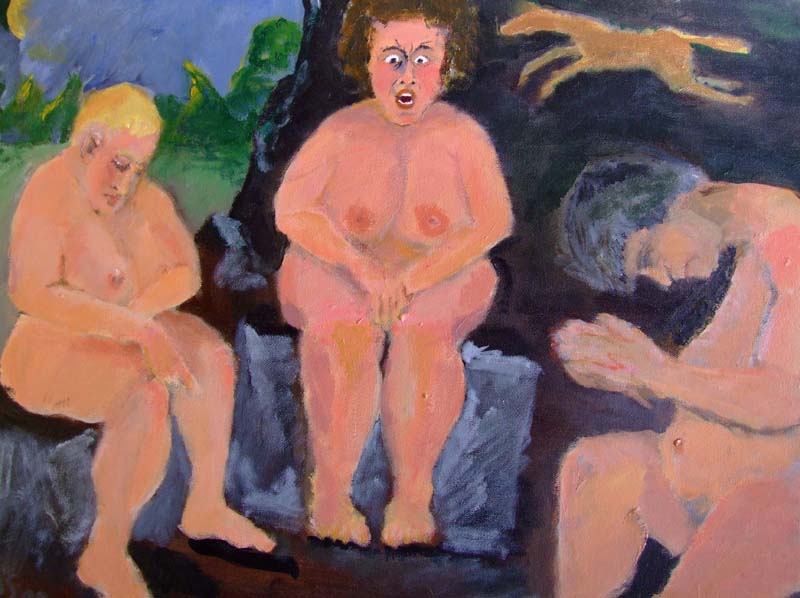
News from the Field Fall 2003 Battered by incessant wars and rapes since Bronze Age, females are in deep shock and have amnesia regarding female culture and female humanity. Imbedded from thousands of years of genocide practices, fear, generations long, has become this amnesia and female silence. 2003 was a crisscrossing of the globe. In January and February I was in Sri Lanka the exact time a peace treaty was signed declaring an end to 22 years of war. However, I have witnessed as other women have that the war never ends. In June and July, I was in Bombay/Mumbai India and back to Bosnia. In Bosnia, I facilitated the annual “Peaceful Dimensions Against Gender Violence,” conference in Novi Travnik, Bosnia. Again, I witnessed how the war never ends for women despite having multinational troops stationed in Bosnian cities for over 8 years now. Mumbai had female beggars with children so thin that I thought I was looking at sticks. My kolo (Bosnian for circle or to dance) work in these places allows females to remember their wisdom so that they become self-sustainable not only economically but also emotionally. The kolo work ennobles females to deal with their traumas by tapping into our inherent female culture and roots. Battered by incessant wars and rapes since Bronze Age, females are in deep shock and have amnesia regarding female culture and female humanity. Imbedded from thousands of years of genocide practices, fear, generations long, has become this amnesia and female silence. The Bosnian women, called ‘Sumejja Kolo,’ have been in the kolo program since March 1999 and ten of them have become certified kolo advisors. The women become empowered once the amnesia is broken. How? The Sumejja Kolo marched for garbage pickup in their town of Novi Travnik, and facilitated kolo meetings with war crimes survivors in Vittez-Amijca, Jayce, Zenica and Sebrenica. To facilitate a kolo gathering the necessary ingredients of coffee cups, coffee cup readings and other women’s divinatory arts such as the Slavic 41 white beans and first person stories are strongly present. The shock triggers memory when hearing other female’s first person story. More climatic then a massive earthquake, bearing witness to the Bosnians and in Sri Lanka first person stories one becomes conscious at how universal and how webbed we really are to each other. Tamils, Hindus, Singhalese, Bosnian Muslims, all females spoke in exact detail the same war crime the world over. The hatred of anything female is murdered, assaulted, denigrated and made invisible. At one of the kolo meetings in Bosnia, an elder white haired woman with huge reading glasses sucked up her crying to state how she just realized her mother could not show her love as she has done with her children. Wringing her tissue she declared the war never ends. Do females blame the war for not being able to love their children especially their daughters? Often the Bosnian women remark how it was better during the war then now. I always wonder with that remark if that is why we have incessant wars. Countless times, my soul inquires where are the women, the earth wide sisterhood? How is it that we as females are in denial of catastrophic rape statistics, murders and global wars declared not on countries, armies or ruling male governments but on homes (wombs archetypal), families and children? More money was spent in developing a tank that shears homes in half for the Israeli army then for humanitarian aid efforts there. Female culture and Female humanity embraces solidarity usually only in times of war, traumas and crisis. The kolo work allows for solidarity and support to occur in times of need, advocacy and concern for all sisters earth wide. If you are interested in collaborating for solidarity and to break the amnesia -female silence please consider a donation or your services for the kolo work and the nonprofit ‘The Kolo: Women’s Cross Cultural Collaboration.” The annual “Peaceful Dimensions’ Conference,” held annually in Novi Travnik, has international female visitors from other countries bearing witness to Bosnian female’s war and first person stories. Join me for that work/study tour and make a difference in your life and the earth. Become visible. Check the Baba Yaga Section of this website and read first person story accounts of the Sumejja Kolo. Your donation to them will be heartfelt. A fund towards a ‘safe place’ for females in the town of Novi Travnik is one dream. Air miles for the Bosnian certified kolo advisors and for myself to provide more training is very needed. Donations can be tax exempt through the nonprofit The Kolo: Women’s Cross Cultural Collaboration. Even $10 goes such a long way if each of us donated. Women can heal the earth and stop the war that never ends. Feminine Matrix is requesting articles from females who are advocating, bearing witness to the war that never ends. We will publish the article that proclaims and understands the depth of bearing witness, solidarity and support for female culture and female humanity.
Creepy Normalization Man”u” Fractures Amnesia of What Sustains Us All
Creepy Normalization man”u”factures Amnesia of what sustains us all What I learned from my travels of 2007 & 2008 into Africa and Bosnia Amnesia-Blindness Affliction When I heard the pain in her Congolese narrative, when I felt the sharpness of sight uncensored, absent of amnesia, my inward gasp announced shock at what others encounter in their days and nights. Almost involuntarily, I sought the origin of crisis, disasters and violence, with the ages’ old question: “How did we get to this point?” What I discovered as I looked for the mouth of the river called violence is in reality the universal and common to all. No matter where, whether I walk the landscape of Africa, Bosnia, India or Sri Lanka, even the United States, most of us find that it is literally imperceptible to discern how it commenced. The smallness and perhaps subatomic aspects of actions or a lack of actions has metabolized into blindness affliction that may be best articulated as amnesia. Amnesia is a blindness affliction producing the creepy normalization of what would be anathema to us. In reflection of my journeys to Africa and Bosnia, I would encounter sheer madness since most have amnesia on what sustains us and our planet. I discovered that whatever our female values are, those feminine aspects are not known as a way of life across the globe. Instead, the blindness affliction helps to spin doctor, the destruction and violence ritualized practices of rape, war and conflict into the phrase,” culture.” Take for instance, in the Congo, the degrading poverty spirals into impossible lowest levels with each outbreak of violence. Each rape is pronounced as the militia or rebel army’s right for fighting delusional evil in others and what the women must gratefully submit to. Stated as “it is the way it is,” by the women, themselves, spins it into a cultural event despite having rape listed as a war crime in the international court. “They come from the underneath the banana or Mango trees. We are told that we are helping the fight and taking care of the men who have needs,” spoke the downcast eyes and face of a Ugandan woman. Outside any hotel in downtown Kampala, Uganda has very young prostitutes soliciting their bodies for money to eager tourists from abroad or nearby countries. Supposedly, enlightened and liberal westerners think that prostitution should be a business commodity. As I walk by the barely thirteen year old Uganda girl-child, slick with cosmetics and provocative outfit, I wonder how any mother would really think it’s a business. The loss of female values and culture impounded with the most severe disrespect and disdain of her body is often okay with mothers. Creepy normalization in misogynistic edicts Let’s turn to how the economic disparity makes for a mother’s desperation. Then, let’s look at how religious male perspective dogma swallowed by faithful mothers allows for objectified female bodies due to being mimicry for worship and/or fond regard for females. Who wouldn’t want to be Daddy’s little girl all her life as opposed to her mother’s unlived life modeled to her as a male ideologist and peon, when statistics scream about our daughters’ incestuous unions with her father or rape objects’ for males ? Now, we move to religious mother’s beliefs that all daughters need legislation and extreme male outside authority/system to tell her how to be the perfect victim. Laws are tailored made to legislative her uterus. Other forms of rule of law are the creepy normalization in misogynistic religious edicts of her female sex on how to dress and even where to sit in her substandard place. I think of the Serbian Orthodox liturgy services, she must sit on the left while he is given the ‘right,’ along with not allowing her communion if she has her menses. There is a ritual for mothers after she births her child. She must be blessed by the priest when she finishes her birthing blood flow before setting foot into the “holy” halls. In the catholic sector, priests reign in sexual abuse of both sons and daughters and demand no woman behind the altar. When the last pope died -who reigned over the most hideous sexual exploitation by his priestly following- it was mostly women weeping beyond the pale and kissing his photo as his decaying corpse was hauled off into the moist mother earth. It is no wonder why mothers would not know immediately how it is exploitation via poverty of a barely tolerated female gender, that the culture with creepy normalization gives two choices to daughters: either marries to be either Madonna or make money and be the whore. I have yet to observe or hear about any mother’s outrage at her or other women’s poverty. Neither are her daughter nor son’s exploitation and her female gender splashed in media or the news except for being pornographic titillating victim material. It’s everywhere. In the states we do not see Sarah Palin bothered by her female sex being exploited as she continues the worship fathers and the male kingdom. It’s about the creepy normalization that this is what women want, what women need and most importantly being told who they are by outside ‘male perspective only’ authorities. Moist Mother Degradation coincides with HER degradation-an opportunity for female solidarity? Did you ever wonder how the creepy normalization of what the earth and its sea and landscapes once beheld became denuded deserts and red tide oceans? It had to take generations of abuse and caustic practices to deplete the vast oceans into cesspools of plastic, garbage and chemical spillage. Our blindness affliction-amnesia is superimposed on Rachel Carson’s 1962 clarion call of the coming “Silent Spring.” Is it because she is female that we are blind to Rachel Carson’s message and her prophecy? Forests once populated much of the global landscapes a mere 8,000 years ago. Even if we look at photos fifty to one hundred years ago, we see how the trees protect
Syrian War
On October 4, 2012, after a Syrian bombing kills five women and children in a Turkish border town, has CNN interviewing former Nation ‘Supreme’ Commander, Wesley Clark, as their media an expert. Clark states that the killing of Turkish mother’s and children, “It happens…..civilian casualties.” Citing it is a part of a broader conflict and how strategies are at work in the region, the reasoning behind the patriarchs in NATO, and humanitarian organizations conglomerates such as the UN, are that they cannot be mobilized as of yet. ‘The powers that be’ reasoning; it is not a full scale war or enough refugees to merit the spending of their coffers sitting at millions and millions of dollars in their organizations. You and I, ‘we’ gave them our inner authority, emptied the insides of our pockets for the experts in violence and autocrats to push paper or do critical analysis to make sure the situation fits the definition to merit the slightest intervention. Media displays the horrors of yet another war. You could substitute the Syrian peoples with that of the Balkan War survivors. Meanwhile, the axis of resistance which refers to Iran, Syria, and Hezbollah in Lebanon to the Palestinian Islamist group Hamas in Gaza continues to erupt. Whole countries recovering from ethnic hatreds, wars and violence surely shudder at each image flying past on their television sets or in more removed countries it’s their smart phones, ipads or laptops. Ho-hum is the reaction to the war images if it is not as succulent as the graphic bodies in a fine spray of red rain and bomb shrapnel. We are addicted to following fresh bodies, bombs and bullets. Just like garbage once in the trash can or on curbside for pick up – very few think of where it goes- the aftermath. You see, being a bystander is so much more rewarding sitting in front of our televisions, ipads, laptops or smart phones. We can pretend we are just being more informed while our physical bodies grow limp and our capacity to respond and act atrophies. We believe someone else will do it. We believe the outside authorities are the truth. Nowhere in media do I see the ‘real’ cost in human lives. There is not a single article on collateral damage, the cost of homes destroyed, and the maimed and lame limbed individuals that can no longer feed their families. I notice how it is our homes, our families in the bulls’ eye of mass destruction weapons. The bystanders feel euphoric that is not them or their homes on fire. They have media images and reports to prove that false sense of safety. Bystander living is the end all. It is the end all of life on this planet. The term “we, the people” is no longer able to respond as a community.

Her political activities define her radical nature
Wahu Kaara and Danica Anderson, Female Solidarity Wahu Kaara, Nobel Peace Prize Nominee/Winner 2005, board member of the Kolo: Women’s Cross Cultural Collaboration is a leading advocate for social justice in Kenya. She says: “African women are not dying for Africa anymore; they want to live for Africa.” She works for the Kenya Debt Relief Network (Kendren), the African Social Forum and the Kenya Social Forum. Her political activities define her radical nature and instead of her name or stereotyped roles females play, Wahu’s identity is the community she keeps. A 53-year-old widow, describes herself as a global social justice activist. The former history and Kiswahili teacher says she has been radical from an early age, having been involved in promoting social justice and economic democracy for 30 years. Despite the repression from the government and the hard times she experienced when her husband was forced into exile, the mother of four relentlessly worked locally and is today involved internationally in the African Social Forum and the Kenya Debt Relief Network, and she is also one of the main leaders of Katiba Watch, the main lobby group spearheading the ongoing mass mobilization in Kenya around the demand for a new constitution. We can learn more about Wahu through a series of quotes and pieces from conversations I had with her in Toronto, Canada for the Genevieve Vaughn sponsored (M) Otherworld Conference. This is Wahu’s voice and identity: All movements we do must know how to connect making what we know. Refuse to be a victim. Stand up in your power. Fertility of Women’s Spirituality Women are being dislocated and disoriented. We need to stop the unending re-inventing and re-engineering of women, who we are. The matriarchy is the heartbeat of the community. The waking up of the people…. How matriarchy is a community not a system. We have to show how it works. We get lost when we do not connect all.
Witnessing in the Congo DRC, Africa
Witnessing in the Congo DRC, Africa by Danica Anderson If you had the exquisite pleasure to witness the Congo-Africa, I am sure you would witness what I have observed. The violence and conflicts are intergenerational practices in postlithic societies. It is no small wonder that Post Traumatic stress is, also, intergenerational. In Paleolithic and Neolithic eras, stress helped generate collaborative practices and connectivity prospecting social positive growth. As I witness the trauma within the peoples of Africa, I observe how stress is used to have submission and to create the impregnating prison called poverty. It is a well-known fact that stress in females causes more sons to be born. My intuitive grasp of the fact that more sons are born under maternal stress is as if it were to birth more warriors to the global army called violence. From the book “On Deep History and the Brain,” neurophysiologist Robert Sapolsky neurophysiologist is quoted as saying “When humans invented poverty, they came up with a way of subjugating the low-ranking like nothing ever before seen in the primate world.” In the human world – supposedly superior to the primate world- seems to have increased the mechanisms to perpetuate and foster stress hormones- creating physical poverty and spiritual poverty. Despite the seemingly endless and chronic poverty and violence I have observed the small acts moving past the traumas, tragedies and poverty in the most unexpected places and spaces. When I am offered the observation of billowing African rain clouds dropping rain onto refugee’s meager gardens, and dancing children shrieking delight opening the windows and gates of the poverty prison instantly are opened. I see the return to the Paleolithic and Neolithic eras and practices, where Mother Nature heals and provides signposts for much needed relief from domineering stress crashing down on their shoulders. As the Congolese children cavort in the Mother Nature’s elements, with some children in rags or naked in their poverty, I witness a powerful coalition in which the weak can be empowered and over power the warriors of violence/poverty. I passed one Congolese mother hoeing her luscious garden on a steep incline as her three children play nearby. Another is singing as she carries a bundle of heavy sticks on her head. In the Congo, the environment teaches me that the real intention for my visit here is to uncover the world of peoples who are not in history or media except as victims. I ache to see the powerful coalition and their first person stories unfolded in history books and media. It is important to have the laughter from children and having the small acts women do across the globe in the evening newscasts. I see the Congolese women as the true form of what we call heroines as they grow food, nurture and care for their children. The Congolese children squealing with laughter as the soft rain spills from dramatically beautiful rain clouds above are the empowered forces that quell the ruling oligarchies in an instant. I am witnessing the laughter and glee of Congolese children and the passion of Congolese women hoeing their gardens as an empowering social memory that easily moves past the stress mechanisms readily induced in their lives and our lives. What if we decided to witness the peoples who are left without a written word and without written histories of their invisible lives? What would we learn? We would learn that the young are rising populations here…most are orphans left to die where they tread…. Women are objects of abuse and violence and die in great numbers. Childbirth is one of the leading causes of death. Sometimes, bearing witness fills us with the burden of insight.
The Wild Elephant Encounter
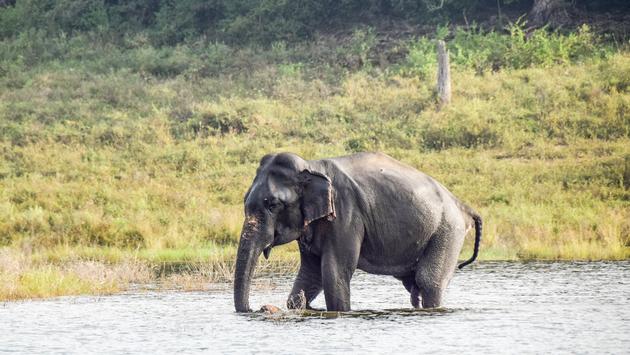
[fusion_builder_container hundred_percent=”no” equal_height_columns=”no” menu_anchor=”” hide_on_mobile=”small-visibility,medium-visibility,large-visibility” class=”” id=”” background_color=”” background_image=”” background_position=”center center” background_repeat=”no-repeat” fade=”no” background_parallax=”none” parallax_speed=”0.3″ video_mp4=”” video_webm=”” video_ogv=”” video_url=”” video_aspect_ratio=”16:9″ video_loop=”yes” video_mute=”yes” overlay_color=”” video_preview_image=”” border_size=”” border_color=”” border_style=”solid” padding_top=”” padding_bottom=”” padding_left=”” padding_right=””][fusion_builder_row][fusion_builder_column type=”1_1″ layout=”1_1″ background_position=”left top” background_color=”” border_size=”” border_color=”” border_style=”solid” border_position=”all” spacing=”yes” background_image=”” background_repeat=”no-repeat” padding_top=”” padding_right=”” padding_bottom=”” padding_left=”” margin_top=”0px” margin_bottom=”0px” class=”” id=”” animation_type=”” animation_speed=”0.3″ animation_direction=”left” hide_on_mobile=”small-visibility,medium-visibility,large-visibility” center_content=”no” last=”no” min_height=”” hover_type=”none” link=””][fusion_text] The wild elephant encounter In 2003, an Italian NGO and UNICEF contracted me to go to Anaradapura in Sri Lanka and teach on the subject of gender-based violence. As part of the assignment, I was ensconced in a small house on the grounds of a hotel resort run by a Sri Lankan and his Italian wife. These were special accommodations. The grounds were shrouded by a 12-foot-high fence topped with barbed wire. The facility inside was beyond beautiful, and its special nature was by design. Frequent guests included UN staff, humanitarian aid workers, and the Prime Minister of Sri Lanka. During my stay, the area was also being used to accommodate the hotel owner’s mother-in-law. I was told these accommodations would help ensure I would not fall ill during the six-week stay. Each day after conducting training, I would hurry out the facility’s back gate to look upon a nearby reservoir. Just beyond the fence was a set of stone benches. The view was peaceful and beautiful. One day as I sat on a bench enjoying the view, I spied a huge bill elephant with tusks in the reservoir, about a quarter mile away. It was thrilling to see a wild elephant. Later, the owner of the hotel was overjoyed by the news of my elephant sighting. He said no guest and none of his workers ever reported witnessing elephants at the reservoir. I continued to visit the reservoir just beyond the gate. With each visit my appreciation for the reservoir’s beauty grew. Sometimes I had to run across the grounds to make my way beyond the gate and reach the benches to have enough time to linger before nightfall. One day I ran across the grounds, shoved open the back gate, and started to run instinctively in the direction of the benches. But I stopped myself abruptly when I realized something was right in front of me, so large that I had not been able to notice it. I looked up and found myself staring into the eyes of a wild elephant staring right back at me. I felt mesmerized by the elephants large eyes. In that moment I felt only love. What must have been a profound silence was eventually broken by a whispered shout. It was the hotel owner calling out to me, telling me to not move. From my point of view, from inside the encounter, I felt completely at ease, and because of that I told the hotel owner to just shut up. After a few minutes, the elephant moved away and found a patch of ground to give itself a dirt bath. I sat down on the bench and promptly began journaling about my encounter. I did not appreciate the dirt that was flying onto the pages of my journal, and I yelled at the elephant and demanded it stop. The elephant did not stop. Instead, the elephant lay down at my feet and slept for a half hour. When it finally rose, the elephant stood before me and showed me its knee. Apparent was an injury. Walking off silently into the same jungle from where it came, the elephant left and I started to cry. The owner rushed out from the protected compound, excited and relieved. He informed me that no one ever lives to tell a story about an intimate encounter with a wild elephant. Being an American, I had no idea about this one way or the other. Fear was not at all a part of my feelings from this experience. At the training the next morning, all thirty of the students bowed reverently to me. Somehow they had heard about my wild elephant encounter and all they wanted to do was talk about it. They bowed to me reverently and, jokingly, I encouraged them to teach this kind of respect to my children. At lunchtime, I ate with the students. As is local custom, we ate without the aid of utensils, just clean hands to scoop up my curried rice and vegetables. I was served a special rice dish by the cook, who also had heard about my encounter. Back at the hotel, I found an altar honoring the Hindu elephant diety Ganesh. I decorated it with food and flowers. Later, I saved food from the buffet and gave the food to the women sweepers who would come to my window every early morning, singing the Gayatri Mantra, a sacred Hindu hymn. [/fusion_text][/fusion_builder_column][/fusion_builder_row][/fusion_builder_container]