
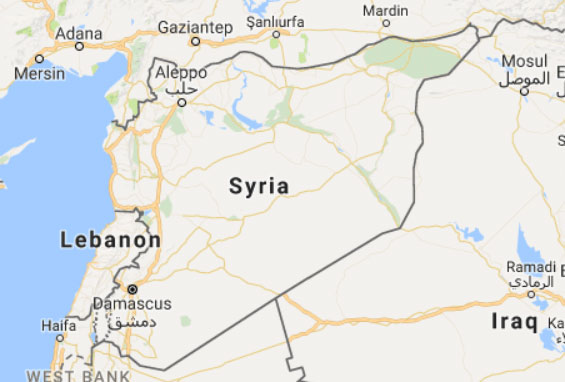
On October 4, 2012, after a Syrian bombing kills five women and children in a Turkish border town, has CNN interviewing former Nation ‘Supreme’ Commander, Wesley Clark, as their media an expert. Clark states that the killing of Turkish mother’s and children, “It happens…..civilian casualties.” Citing it is a part of a broader conflict and how strategies are at work in the region, the reasoning behind the patriarchs in NATO, and humanitarian organizations conglomerates such as the UN, are that they cannot be mobilized as of yet. ‘The powers that be’ reasoning; it is not a full scale war or enough refugees to merit the spending of their coffers sitting at millions and millions of dollars in their organizations. You and I, ‘we’ gave them our inner authority, emptied the insides of our pockets for the experts in violence and autocrats to push paper or do critical analysis to make sure the situation fits the definition to merit the slightest intervention. Media displays the horrors of yet another war. You could substitute the Syrian peoples with that of the Balkan War survivors. Meanwhile, the axis of resistance which refers to Iran, Syria, and Hezbollah in Lebanon to the Palestinian Islamist group Hamas in Gaza continues to erupt. Whole countries recovering from ethnic hatreds, wars and violence surely shudder at each image flying past on their television sets or in more removed countries it’s their smart phones, ipads or laptops. Ho-hum is the reaction to the war images if it is not as succulent as the graphic bodies in a fine spray of red rain and bomb shrapnel. We are addicted to following fresh bodies, bombs and bullets. Just like garbage once in the trash can or on curbside for pick up – very few think of where it goes- the aftermath. You see, being a bystander is so much more rewarding sitting in front of our televisions, ipads, laptops or smart phones. We can pretend we are just being more informed while our physical bodies grow limp and our capacity to respond and act atrophies. We believe someone else will do it. We believe the outside authorities are the truth. Nowhere in media do I see the ‘real’ cost in human lives. There is not a single article on collateral damage, the cost of homes destroyed, and the maimed and lame limbed individuals that can no longer feed their families. I notice how it is our homes, our families in the bulls’ eye of mass destruction weapons. The bystanders feel euphoric that is not them or their homes on fire. They have media images and reports to prove that false sense of safety. Bystander living is the end all. It is the end all of life on this planet. The term “we, the people” is no longer able to respond as a community.
Syrian War
On October 4, 2012, after a Syrian bombing kills five women and children in a Turkish border town, has CNN interviewing former Nation ‘Supreme’ Commander, Wesley Clark, as their media an expert. Clark states that the killing of Turkish mother’s and children, “It happens…..civilian casualties.” Citing it is a part of a broader conflict and how strategies are at work in the region, the reasoning behind the patriarchs in NATO, and humanitarian organizations conglomerates such as the UN, are that they cannot be mobilized as of yet. ‘The powers that be’ reasoning; it is not a full scale war or enough refugees to merit the spending of their coffers sitting at millions and millions of dollars in their organizations. You and I, ‘we’ gave them our inner authority, emptied the insides of our pockets for the experts in violence and autocrats to push paper or do critical analysis to make sure the situation fits the definition to merit the slightest intervention. Media displays the horrors of yet another war. You could substitute the Syrian peoples with that of the Balkan War survivors. Meanwhile, the axis of resistance which refers to Iran, Syria, and Hezbollah in Lebanon to the Palestinian Islamist group Hamas in Gaza continues to erupt. Whole countries recovering from ethnic hatreds, wars and violence surely shudder at each image flying past on their television sets or in more removed countries it’s their smart phones, ipads or laptops. Ho-hum is the reaction to the war images if it is not as succulent as the graphic bodies in a fine spray of red rain and bomb shrapnel. We are addicted to following fresh bodies, bombs and bullets. Just like garbage once in the trash can or on curbside for pick up – very few think of where it goes- the aftermath. You see, being a bystander is so much more rewarding sitting in front of our televisions, ipads, laptops or smart phones. We can pretend we are just being more informed while our physical bodies grow limp and our capacity to respond and act atrophies. We believe someone else will do it. We believe the outside authorities are the truth. Nowhere in media do I see the ‘real’ cost in human lives. There is not a single article on collateral damage, the cost of homes destroyed, and the maimed and lame limbed individuals that can no longer feed their families. I notice how it is our homes, our families in the bulls’ eye of mass destruction weapons. The bystanders feel euphoric that is not them or their homes on fire. They have media images and reports to prove that false sense of safety. Bystander living is the end all. It is the end all of life on this planet. The term “we, the people” is no longer able to respond as a community.
Bird Killing 300 Mile Coastal Toxic Algae Bloom & South Slavic One Species Mind
The toxic algae bloom has armed scientists with a new theory. In place of observations or what we can learn from Mother Nature on how to immediately respond, scientists armed themselves, against the forces of the natural world fixating on having the right theory. The adjustment to sciences’ storehouse of theories has the asteroids as the main factor in the extinction of dinosaurs but now point to the toxic algae bloom as a probable factor for the extinction. Scientists, novices in observation of Mother Nature, are just beginning to evaluate the blooms of a single-cell, saltwater algae species, the Akashiwo Sanguine in the Northwest Puget Sound. Thousands of bird carcasses mark the area of what is known as the Pacific Northwest pristine waters and land. On the sand near the algae-generated foam on Klipsan beach, the north end of the Long Beach Peninsula of Washington State, a red-throated loon convulses from its immersion in the lethal 300 mile toxic bloom. It takes closer inspection to see the red color on the throat of the loon in the soap like foam. The saltwater algae damage the bird’s natural oils that protect against hypothermia in cold waters. The failures of the birds’ oiled feathers, somewhat, equivalent to surfers’ with their tight waterproof and warm manufactured skins, have, also, succumbed to illness. Like the thousands of birds falling from the skies or unable to fly again, the surfers’ pseudo skin cannot protect against sickness that coats the bird feathers like an oil spill. Eventually touching all into a single field of being, what happens to the birds happens to you. What does not register with the surfers or kayakers, just as with certified scientists, is the degree of how we learn something about the mechanisms of Mother Nature operating at the micro playground but reflecting the over arching cosmological playground. If we are to accept our separateness and segmentation from the greater whole as science demands for Mother Nature, we cannot crystallize Mother Nature’s diverse species mind that link all together. The death of thousands of birds in the Northwest Marine waters and the diseased human skin from exposure to the Akashiwo Sanguine, saltwater algae species, articulates an overarching example of the single fabric (Mother Nature) organized into the natural order which, intensively, harbors the one species-mind. It is an archetypal architecture that consciously undresses Mother Nature by emptying any notions of control, theories, or science’s longitude studies. The archetypal architecture of the one-species mind is threaded in most tribal peoples. Significant patterns within the tribal peoples when facing horizon events evokes an immediate period of intensified learning, as a means of responding. While the science field has, at points, incorporated intensified learning applications, study is not synonymous with the one species- mind. Studies can go on for centuries having no validity within the ability to respond or act in a “timely” fashion. Responsiveness is participation immersed in the one species-mind as opposed to science’s and other modern day institutions’ reacting with each horizon events. Constantly reacting in the aftermath of such catastrophes has implemented cement like structure of reacting ranging from fire departments, toxic clean-up protocols, peace keeping armies or mandatory inoculations. Questioning is least found among the plethora of manuals and procedures that could lead to learning environments as the one species mind responsiveness. Note that the one species mind responsiveness is both the thousands of deaths of birds and illnesses of humans playing in Mother Nature’s oceans and that of the flock of birds rising in synchronicity on long distance flights without maps or flight control monitors. What comes up is the solidarity evoked in the one species mind for both the massive deaths and that of life searching avian migrations but, elegantly responsive pro-actively and in the moment consciousness. In the South Slavic and Russian female culture and female humanities, tens of thousands of years older than any scientific longitude study or holy books written by men-it is pure science undivided. We have only to survey the evidence of Slavic science found in the thousands of archeological figures of zoomorphic Bird Goddesses and Fish Goddesses. Our ancients without computers or metal technologies observed avian and marine species, to thread social memory via intensified learning response practices. As a science of observation and witnessing all of life, for the Slavs, the birds are, essentially, the witches/angels’ (wise living feminine) capacities to respond with solidarity. What this indicates is the application of the one species mind when the need arises, the Slavic triple aspect of before, interim and in the aftermath of life events. Modern archeomythological renditions have more or less submitted to the idea of angels across many patriarchal or father sky god religions as an appeasement that submerges their fear and deep suspicions of witches as evil. For the Slavs, Mother Nature is the iconic Baba Yaga, translated as wise woman and Yaga the term for Pelican and ‘fright.’ Frequent subjects of sainthood in Catholic worship or Orthodox churches, angels are fully dressed and resplendent with avian wings to proclaim active participation in superordinate circles of the archetypal architects of Mother Nature one species mind. For the Slavs, the archetypal architect is navigated by Slavic Baba Yaga, the first witch that continued into the Greek and Roman Métis, Fates and both the warrior angel and saint. The social memory for the witch-Baba Yaga-Mother Nature is her ability for prophecy, seer, or wisdom which is in reality her ability to remain within the connection of one species-mind. Flying the skies in her mortar and pestle (represents her bio-agricultural and botany for healing) according to the folk tale, Baba Yaga’ s one species mind sees- feels, while, intuitively and rationally has an immediate knowing for the vast connections in being one family. But, how do we see the fullest connection to the past into our present moment of climate change? In modern day the South Slavic women’s linens and kilms/rugs attests to the legacy of social memory revolving around the

Her political activities define her radical nature
Wahu Kaara and Danica Anderson, Female Solidarity Wahu Kaara, Nobel Peace Prize Nominee/Winner 2005, board member of the Kolo: Women’s Cross Cultural Collaboration is a leading advocate for social justice in Kenya. She says: “African women are not dying for Africa anymore; they want to live for Africa.” She works for the Kenya Debt Relief Network (Kendren), the African Social Forum and the Kenya Social Forum. Her political activities define her radical nature and instead of her name or stereotyped roles females play, Wahu’s identity is the community she keeps. A 53-year-old widow, describes herself as a global social justice activist. The former history and Kiswahili teacher says she has been radical from an early age, having been involved in promoting social justice and economic democracy for 30 years. Despite the repression from the government and the hard times she experienced when her husband was forced into exile, the mother of four relentlessly worked locally and is today involved internationally in the African Social Forum and the Kenya Debt Relief Network, and she is also one of the main leaders of Katiba Watch, the main lobby group spearheading the ongoing mass mobilization in Kenya around the demand for a new constitution. We can learn more about Wahu through a series of quotes and pieces from conversations I had with her in Toronto, Canada for the Genevieve Vaughn sponsored (M) Otherworld Conference. This is Wahu’s voice and identity: All movements we do must know how to connect making what we know. Refuse to be a victim. Stand up in your power. Fertility of Women’s Spirituality Women are being dislocated and disoriented. We need to stop the unending re-inventing and re-engineering of women, who we are. The matriarchy is the heartbeat of the community. The waking up of the people…. How matriarchy is a community not a system. We have to show how it works. We get lost when we do not connect all.
Witnessing in the Congo DRC, Africa
Witnessing in the Congo DRC, Africa by Danica Anderson If you had the exquisite pleasure to witness the Congo-Africa, I am sure you would witness what I have observed. The violence and conflicts are intergenerational practices in postlithic societies. It is no small wonder that Post Traumatic stress is, also, intergenerational. In Paleolithic and Neolithic eras, stress helped generate collaborative practices and connectivity prospecting social positive growth. As I witness the trauma within the peoples of Africa, I observe how stress is used to have submission and to create the impregnating prison called poverty. It is a well-known fact that stress in females causes more sons to be born. My intuitive grasp of the fact that more sons are born under maternal stress is as if it were to birth more warriors to the global army called violence. From the book “On Deep History and the Brain,” neurophysiologist Robert Sapolsky neurophysiologist is quoted as saying “When humans invented poverty, they came up with a way of subjugating the low-ranking like nothing ever before seen in the primate world.” In the human world – supposedly superior to the primate world- seems to have increased the mechanisms to perpetuate and foster stress hormones- creating physical poverty and spiritual poverty. Despite the seemingly endless and chronic poverty and violence I have observed the small acts moving past the traumas, tragedies and poverty in the most unexpected places and spaces. When I am offered the observation of billowing African rain clouds dropping rain onto refugee’s meager gardens, and dancing children shrieking delight opening the windows and gates of the poverty prison instantly are opened. I see the return to the Paleolithic and Neolithic eras and practices, where Mother Nature heals and provides signposts for much needed relief from domineering stress crashing down on their shoulders. As the Congolese children cavort in the Mother Nature’s elements, with some children in rags or naked in their poverty, I witness a powerful coalition in which the weak can be empowered and over power the warriors of violence/poverty. I passed one Congolese mother hoeing her luscious garden on a steep incline as her three children play nearby. Another is singing as she carries a bundle of heavy sticks on her head. In the Congo, the environment teaches me that the real intention for my visit here is to uncover the world of peoples who are not in history or media except as victims. I ache to see the powerful coalition and their first person stories unfolded in history books and media. It is important to have the laughter from children and having the small acts women do across the globe in the evening newscasts. I see the Congolese women as the true form of what we call heroines as they grow food, nurture and care for their children. The Congolese children squealing with laughter as the soft rain spills from dramatically beautiful rain clouds above are the empowered forces that quell the ruling oligarchies in an instant. I am witnessing the laughter and glee of Congolese children and the passion of Congolese women hoeing their gardens as an empowering social memory that easily moves past the stress mechanisms readily induced in their lives and our lives. What if we decided to witness the peoples who are left without a written word and without written histories of their invisible lives? What would we learn? We would learn that the young are rising populations here…most are orphans left to die where they tread…. Women are objects of abuse and violence and die in great numbers. Childbirth is one of the leading causes of death. Sometimes, bearing witness fills us with the burden of insight.
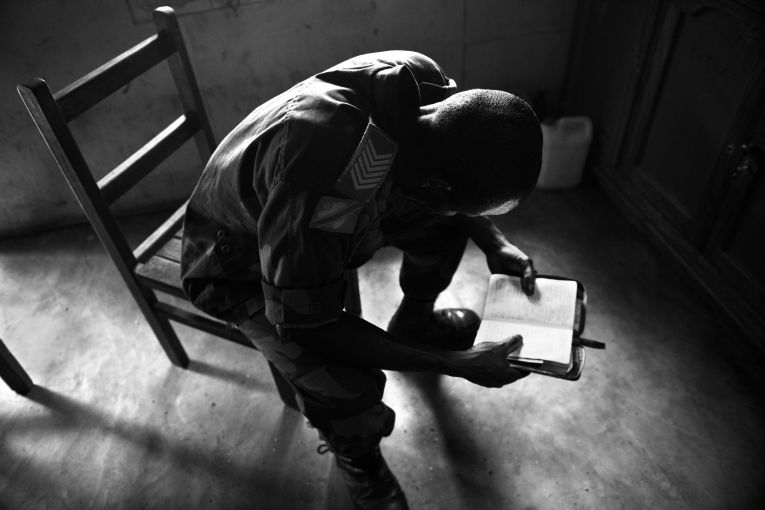
Why Soldiers Rape By Helen Benedict, In These Times
[fusion_builder_container hundred_percent=”no” equal_height_columns=”no” menu_anchor=”” hide_on_mobile=”small-visibility,medium-visibility,large-visibility” class=”” id=”” background_color=”” background_image=”” background_position=”center center” background_repeat=”no-repeat” fade=”no” background_parallax=”none” parallax_speed=”0.3″ video_mp4=”” video_webm=”” video_ogv=”” video_url=”” video_aspect_ratio=”16:9″ video_loop=”yes” video_mute=”yes” overlay_color=”” video_preview_image=”” border_size=”” border_color=”” border_style=”solid” padding_top=”” padding_bottom=”” padding_left=”” padding_right=””][fusion_builder_row][fusion_builder_column type=”1_1″ layout=”1_1″ background_position=”left top” background_color=”” border_size=”” border_color=”” border_style=”solid” border_position=”all” spacing=”yes” background_image=”” background_repeat=”no-repeat” padding_top=”” padding_right=”” padding_bottom=”” padding_left=”” margin_top=”0px” margin_bottom=”0px” class=”” id=”” animation_type=”” animation_speed=”0.3″ animation_direction=”left” hide_on_mobile=”small-visibility,medium-visibility,large-visibility” center_content=”no” last=”no” min_height=”” hover_type=”none” link=””][fusion_text] Why Soldiers Rape By Helen Benedict, In These Times Printed September 13, 2008 Editor’s note: This article is adapted from “<http://www.helenbenedict.com/>The Lonely Soldier: The Private War of Women Serving in Iraq,” to be published by Beacon Press in April 2009. An alarming number of women soldiers are being sexually abused by their comrades-in-arms, both at war and at home. This fact has received a fair amount of attention lately from researchers and the press — and deservedly so. But the attention always focuses on the women: where they were when assaulted, their relations with the assailant, the effects on their mental health and careers, whether they are being adequately helped, and so on. That discussion, as valuable as it is, misses a fundamental point. To understand military sexual assault, let alone know how to stop it, we must focus on the perpetrators. We need to ask: Why do soldiers rape? Rape in civilian life is already unacceptably common. One in six women is raped or sexually assaulted in her lifetime, according to the National Institute of Justice, a number so high it should be considered an epidemic. In the military, however, the situation is even worse. Rape is almost twice as frequent as it is among civilians, especially in wartime. Soldiers are taught to regard one another as family, so military rape resembles incest. And most of the soldiers who rape are older and of higher rank than their victims, so are taking advantage of their authority to attack the very people they are supposed to protect. Department of Defense reports show that nearly 90 percent of rape victims in the Army are junior-ranking women, whose average age is 21, while most of the assailants are non-commissioned officers or junior men, whose average age is 28. This sexual violence persists in spite of strict laws against rape in the military and a concerted Pentagon effort in 2005 to reform procedures for reporting the crime. Unfortunately, neither the press nor the many teams of psychologists and sociologists who study veterans ever seem to ask why. The answer appears to lie in a confluence of military culture, the psychology of the assailants and the nature of war. Two seminal studies have examined military culture and its attitudes toward women: one by Duke University Law Professor Madeline Morris in 1996, which was presented in the paper “By Force of Arms: Rape, War, and Military Culture” and published in Duke Law Journal; and the other by University of California professor and folklorist Carol Burke in 2004 and explained in her book, Camp All-American, Hanoi Jane and the High-And-Tight: Gender, Folklore and Changing Military Culture (Beacon Press). Both authors found that military culture is more misogynistic than even many critics of the military would suspect. Sometimes this misogyny stems from competition and sometimes from resentment, but it lies at the root of why soldiers rape. One recent Iraq War veteran reflected this misogyny when he described his Marine Corp training for a collection of soldiers’ works called Warrior Writers, published by Iraq Veterans Against the War in 2008: The [Drill Instructor’s] nightly homiletic speeches, full of an unabashed hatred of women, were part of the second phase of boot camp: the process of rebuilding recruits into Marines. Morris and Burke both show that military language reveals this “unabashed hatred of women” all the time. Even with a force that is now 14 percent female, and with rules that prohibit drill instructors from using racial epithets and curses, those same instructors still routinely denigrate recruits by calling them “pussy,” “girl,” “bitch,” “lady” and “dyke.” The everyday speech of soldiers is still riddled with sexist insults. Soldiers still openly peruse pornography that humiliates women. (Pornography is officially banned in the military, but is easily available to soldiers through the mail and from civilian sources, and there is a significant correlation between pornography circulation and rape rates, according to Duke’s Morris. And military men still sing the misogynist rhymes that have been around for decades. For example, Burke’s book cites this Naval Academy chant: Who can take a chainsaw Cut the bitch in two Fuck the bottom half And give the upper half to you The message in all these insults is that women have no business trying to be soldiers. In 2007, Sgt. Sarah Scully of the Army’s 8th Military Police Brigade wrote to me in an e-mail from Kuwait, where she was serving: “In the Army, any sign that you are a woman means you are automatically ridiculed and treated as inferior.” Army Spc. Mickiela Montoya, who was in Iraq for 11 months from 2005-2006, put it another way: “There are only three things the guys let you be if you’re a girl in the military: a bitch, a ho or a dyke. One guy told me he thinks the military sends women over to give the guys eye candy to keep them sane. He told me in Vietnam they had prostitutes, but they don’t have those in Iraq, so they have women soldiers instead.” The view of women as sexual prey has always been present in military culture. Indeed, civilian women have been seen as sexual booty for conquering soldiers since the beginning of human history. So, it should come as no surprise that the sexual persecution of female soldiers has been going on in the armed forces for decades. A 2004 study of veterans from Vietnam and all wars since, conducted by psychotherapist Maureen Murdoch and published in the journal Military Medicine, found that 71 percent of the women said they were sexually assaulted or raped while serving. In 2003, a survey of
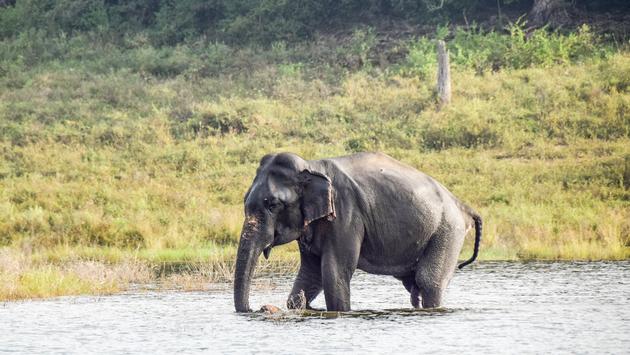
The Wild Elephant Encounter
[fusion_builder_container hundred_percent=”no” equal_height_columns=”no” menu_anchor=”” hide_on_mobile=”small-visibility,medium-visibility,large-visibility” class=”” id=”” background_color=”” background_image=”” background_position=”center center” background_repeat=”no-repeat” fade=”no” background_parallax=”none” parallax_speed=”0.3″ video_mp4=”” video_webm=”” video_ogv=”” video_url=”” video_aspect_ratio=”16:9″ video_loop=”yes” video_mute=”yes” overlay_color=”” video_preview_image=”” border_size=”” border_color=”” border_style=”solid” padding_top=”” padding_bottom=”” padding_left=”” padding_right=””][fusion_builder_row][fusion_builder_column type=”1_1″ layout=”1_1″ background_position=”left top” background_color=”” border_size=”” border_color=”” border_style=”solid” border_position=”all” spacing=”yes” background_image=”” background_repeat=”no-repeat” padding_top=”” padding_right=”” padding_bottom=”” padding_left=”” margin_top=”0px” margin_bottom=”0px” class=”” id=”” animation_type=”” animation_speed=”0.3″ animation_direction=”left” hide_on_mobile=”small-visibility,medium-visibility,large-visibility” center_content=”no” last=”no” min_height=”” hover_type=”none” link=””][fusion_text] The wild elephant encounter In 2003, an Italian NGO and UNICEF contracted me to go to Anaradapura in Sri Lanka and teach on the subject of gender-based violence. As part of the assignment, I was ensconced in a small house on the grounds of a hotel resort run by a Sri Lankan and his Italian wife. These were special accommodations. The grounds were shrouded by a 12-foot-high fence topped with barbed wire. The facility inside was beyond beautiful, and its special nature was by design. Frequent guests included UN staff, humanitarian aid workers, and the Prime Minister of Sri Lanka. During my stay, the area was also being used to accommodate the hotel owner’s mother-in-law. I was told these accommodations would help ensure I would not fall ill during the six-week stay. Each day after conducting training, I would hurry out the facility’s back gate to look upon a nearby reservoir. Just beyond the fence was a set of stone benches. The view was peaceful and beautiful. One day as I sat on a bench enjoying the view, I spied a huge bill elephant with tusks in the reservoir, about a quarter mile away. It was thrilling to see a wild elephant. Later, the owner of the hotel was overjoyed by the news of my elephant sighting. He said no guest and none of his workers ever reported witnessing elephants at the reservoir. I continued to visit the reservoir just beyond the gate. With each visit my appreciation for the reservoir’s beauty grew. Sometimes I had to run across the grounds to make my way beyond the gate and reach the benches to have enough time to linger before nightfall. One day I ran across the grounds, shoved open the back gate, and started to run instinctively in the direction of the benches. But I stopped myself abruptly when I realized something was right in front of me, so large that I had not been able to notice it. I looked up and found myself staring into the eyes of a wild elephant staring right back at me. I felt mesmerized by the elephants large eyes. In that moment I felt only love. What must have been a profound silence was eventually broken by a whispered shout. It was the hotel owner calling out to me, telling me to not move. From my point of view, from inside the encounter, I felt completely at ease, and because of that I told the hotel owner to just shut up. After a few minutes, the elephant moved away and found a patch of ground to give itself a dirt bath. I sat down on the bench and promptly began journaling about my encounter. I did not appreciate the dirt that was flying onto the pages of my journal, and I yelled at the elephant and demanded it stop. The elephant did not stop. Instead, the elephant lay down at my feet and slept for a half hour. When it finally rose, the elephant stood before me and showed me its knee. Apparent was an injury. Walking off silently into the same jungle from where it came, the elephant left and I started to cry. The owner rushed out from the protected compound, excited and relieved. He informed me that no one ever lives to tell a story about an intimate encounter with a wild elephant. Being an American, I had no idea about this one way or the other. Fear was not at all a part of my feelings from this experience. At the training the next morning, all thirty of the students bowed reverently to me. Somehow they had heard about my wild elephant encounter and all they wanted to do was talk about it. They bowed to me reverently and, jokingly, I encouraged them to teach this kind of respect to my children. At lunchtime, I ate with the students. As is local custom, we ate without the aid of utensils, just clean hands to scoop up my curried rice and vegetables. I was served a special rice dish by the cook, who also had heard about my encounter. Back at the hotel, I found an altar honoring the Hindu elephant diety Ganesh. I decorated it with food and flowers. Later, I saved food from the buffet and gave the food to the women sweepers who would come to my window every early morning, singing the Gayatri Mantra, a sacred Hindu hymn. [/fusion_text][/fusion_builder_column][/fusion_builder_row][/fusion_builder_container]