
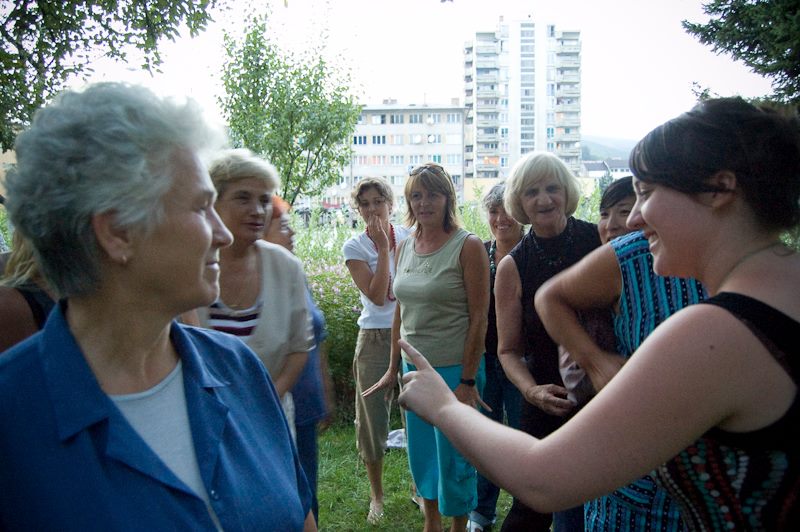
[fusion_builder_container hundred_percent=”no” hundred_percent_height=”no” hundred_percent_height_scroll=”no” hundred_percent_height_center_content=”yes” equal_height_columns=”no” menu_anchor=”” hide_on_mobile=”small-visibility,medium-visibility,large-visibility” status=”published” publish_date=”” class=”” id=”” border_size=”” border_color=”” border_style=”solid” margin_top=”” margin_bottom=”” padding_top=”” padding_right=”” padding_bottom=”” padding_left=”” gradient_start_color=”” gradient_end_color=”” gradient_start_position=”0″ gradient_end_position=”100″ gradient_type=”linear” radial_direction=”center” linear_angle=”180″ background_color=”” background_image=”” background_position=”center center” background_repeat=”no-repeat” fade=”no” background_parallax=”none” enable_mobile=”no” parallax_speed=”0.3″ background_blend_mode=”none” video_mp4=”” video_webm=”” video_ogv=”” video_url=”” video_aspect_ratio=”16:9″ video_loop=”yes” video_mute=”yes” video_preview_image=”” filter_hue=”0″ filter_saturation=”100″ filter_brightness=”100″ filter_contrast=”100″ filter_invert=”0″ filter_sepia=”0″ filter_opacity=”100″ filter_blur=”0″ filter_hue_hover=”0″ filter_saturation_hover=”100″ filter_brightness_hover=”100″ filter_contrast_hover=”100″ filter_invert_hover=”0″ filter_sepia_hover=”0″ filter_opacity_hover=”100″ filter_blur_hover=”0″][fusion_builder_row][fusion_builder_column type=”1_1″ layout=”2_3″ spacing=”” center_content=”no” link=”” target=”_self” min_height=”” hide_on_mobile=”small-visibility,medium-visibility,large-visibility” class=”” id=”” hover_type=”none” border_size=”0″ border_color=”” border_style=”solid” border_position=”all” border_radius=”” box_shadow=”no” dimension_box_shadow=”” box_shadow_blur=”0″ box_shadow_spread=”0″ box_shadow_color=”” box_shadow_style=”” padding_top=”” padding_right=”” padding_bottom=”” padding_left=”” margin_top=”” margin_bottom=”” background_type=”single” gradient_start_color=”” gradient_end_color=”” gradient_start_position=”0″ gradient_end_position=”100″ gradient_type=”linear” radial_direction=”center” linear_angle=”180″ background_color=”” background_image=”” background_image_id=”” background_position=”left top” background_repeat=”no-repeat” background_blend_mode=”none” animation_type=”” animation_direction=”left” animation_speed=”0.3″ animation_offset=”” filter_type=”regular” filter_hue=”0″ filter_saturation=”100″ filter_brightness=”100″ filter_contrast=”100″ filter_invert=”0″ filter_sepia=”0″ filter_opacity=”100″ filter_blur=”0″ filter_hue_hover=”0″ filter_saturation_hover=”100″ filter_brightness_hover=”100″ filter_contrast_hover=”100″ filter_invert_hover=”0″ filter_sepia_hover=”0″ filter_opacity_hover=”100″ filter_blur_hover=”0″ last=”no”][fusion_text columns=”” column_min_width=”” column_spacing=”” rule_style=”default” rule_size=”” rule_color=”” hide_on_mobile=”small-visibility,medium-visibility,large-visibility” class=”” id=”” animation_type=”” animation_direction=”left” animation_speed=”0.3″ animation_offset=””][/fusion_text][fusion_text columns=”” column_min_width=”” column_spacing=”” rule_style=”default” rule_size=”” rule_color=”” hide_on_mobile=”small-visibility,medium-visibility,large-visibility” class=”” id=”” animation_type=”” animation_direction=”left” animation_speed=”0.3″ animation_offset=””] Intensified Learning- Oral Memory Traditions:Play While the Coalitional Play Fighting and the Evolution of Coalitional Intergroup Aggression study hits on the backbone of my kolo informed trauma care and research, it fails to point out the patriarchal hijacking of culture. Culture is created by females due to their biological and genetic capacities to birth and raise children. In fact, it is a nonkilling culture. What is observed is the erasure of the female womb-uterus along with her labors that are invisible in not just studies but in rule of law, policies and violence against her. Dr. Anderson, Bosnia women war crimes and war survivors Kolo Sumejja women Susana Koric, Nisveta and Michelas Maestas in Taos NM – experiential use of the folk round dance kolo- play However, I found that female biological hormones and her womb set up the incredible bonding, empathy, and a nonkilling culture. According to the Neuroscience Behavioral Journal states “ empathy has both evolutionary and developmental precursors, and can be studied using implicit measures, aspects that can help elucidate the respective roles of culture and biology”. I often cringe going through research and studies. For instance, the study Coalitional Play Fighting and the Evolution of Coalitional Intergroup Aggression talks about the evolution of teaching and learning. I define trauma as intensified learning. Intensified learning is an extraordinary epigenetic and neurobiological wonder of the world. Teaching is not in any part of the epigenetic and neurobiological nonkilling culture. In fact, it is where the patriarchy targets nonkilling culture – females and children at their most vulnerable and tender development of culture. Teaching is indoctrination, programming if not incrimination. Studies point out that after 5 minutes of lecturing- teaching our brains turn off. “Sharecropper Mother Teaching Children Numbers and Alphabet, Transylvania, LA, 1939″ – Mini Print – 8″ x 10” Available at Avisca.com The coalition of play study reports the author’s research is to “study the evolution of teaching and learning in humans — i.e., the skills and knowledge that ancestral humans had to acquire in order to make a living, and how they acquired these skill and knowledge sets. I do this by extrapolating from historically documented hunting-and-gathering peoples,” explained study author Michelle Scalise Sugiyama of the University of Oregon”. Distracted parents – Note the cell phone. Note all three of the parents stand alone indicating the loss of the social collective Michelle Sugiyama entangled with the science model shows what Dr. Lynn Margulis states as “trained incapacities“ with her inability to realize women create culture thus a nonkilling culture. Sugiyama writes “In both ancient and modern hunter-gatherer groups there were no schools, books, films, or internet for people to learn from. Knowledge was acquired by observing and listening to others, and by experimenting on one’s own. This is where play comes in: play is widely regarded as an adaptation that develops skills that organisms need later in their lifespan”. I immediately hone in the evolutionary female culture of nonkilling for ‘play’. The organized play in oral memory traditions, a ritual science aligned with our neurobiology, is the accumulation of deep knowledge from all our ancestral grandmother, mothers and daughters. Oral memory traditions of the social collective circle, the dance, music, song, domestic arts (bioculinary & biosemiotics) are packaged to have evolving properties for thousands and thousands of generations. According to Dr. Ernest Lawrence Rossi “the implied directive is thus a way of facilitating an intense state of internal learning or problem solving.” Play, therefore, is the very space and place from which to intervene, to turn away from violence returning to a nonkilling culture. The Kolo:Women’s Cross Cultural and Eugene Ahn’s project of throw away cameras given to children to express their lives. This was taken in the Democratic Republic of the Congo I have observed across the globe and cross culturally how the parents stand alone not watching their children play but watching their cell phones. Most have their head and shoulders buried in their cell phones. We are at a very vulnerable cross roads. We are distracted from the fact we have the capacity to create a nonkilling culture and how we erase women to the point of annihilation. How will technology change future generations? [/fusion_text][/fusion_builder_column][/fusion_builder_row][/fusion_builder_container][fusion_builder_container hundred_percent=”no” hundred_percent_height=”no” hundred_percent_height_scroll=”no” hundred_percent_height_center_content=”yes” equal_height_columns=”no” menu_anchor=”” hide_on_mobile=”small-visibility,medium-visibility,large-visibility” status=”published” publish_date=”” class=”” id=”” border_size=”” border_color=”” border_style=”solid” margin_top=”” margin_bottom=”” padding_top=”” padding_right=”” padding_bottom=”” padding_left=”” gradient_start_color=”” gradient_end_color=”” gradient_start_position=”0″ gradient_end_position=”100″ gradient_type=”linear” radial_direction=”center” linear_angle=”180″ background_color=”” background_image=”” background_position=”center center” background_repeat=”no-repeat” fade=”no” background_parallax=”none” enable_mobile=”no” parallax_speed=”0.3″ background_blend_mode=”none” video_mp4=”” video_webm=”” video_ogv=”” video_url=”” video_aspect_ratio=”16:9″ video_loop=”yes” video_mute=”yes” video_preview_image=”” filter_hue=”0″ filter_saturation=”100″ filter_brightness=”100″ filter_contrast=”100″ filter_invert=”0″ filter_sepia=”0″ filter_opacity=”100″ filter_blur=”0″ filter_hue_hover=”0″ filter_saturation_hover=”100″ filter_brightness_hover=”100″ filter_contrast_hover=”100″ filter_invert_hover=”0″ filter_sepia_hover=”0″ filter_opacity_hover=”100″ filter_blur_hover=”0″][fusion_builder_row][fusion_builder_column type=”1_1″ layout=”1_1″ spacing=”” center_content=”no” link=”” target=”_self” min_height=”” hide_on_mobile=”small-visibility,medium-visibility,large-visibility” class=”” id=”” hover_type=”none” border_size=”0″ border_color=”” border_style=”solid” border_position=”all” border_radius=”” box_shadow=”no” dimension_box_shadow=”” box_shadow_blur=”0″ box_shadow_spread=”0″ box_shadow_color=”” box_shadow_style=”” padding_top=”” padding_right=”” padding_bottom=”” padding_left=”” margin_top=”” margin_bottom=”” background_type=”single” gradient_start_color=”” gradient_end_color=”” gradient_start_position=”0″ gradient_end_position=”100″ gradient_type=”linear” radial_direction=”center” linear_angle=”180″ background_color=”” background_image=”” background_image_id=”” background_position=”left top” background_repeat=”no-repeat” background_blend_mode=”none” animation_type=”” animation_direction=”left” animation_speed=”0.3″ animation_offset=”” filter_type=”regular” filter_hue=”0″ filter_saturation=”100″ filter_brightness=”100″ filter_contrast=”100″ filter_invert=”0″ filter_sepia=”0″ filter_opacity=”100″ filter_blur=”0″ filter_hue_hover=”0″ filter_saturation_hover=”100″ filter_brightness_hover=”100″ filter_contrast_hover=”100″ filter_invert_hover=”0″ filter_sepia_hover=”0″ filter_opacity_hover=”100″ filter_blur_hover=”0″ last=”no”][/fusion_builder_column][/fusion_builder_row][/fusion_builder_container][fusion_builder_container hundred_percent=”no” hundred_percent_height=”no” hundred_percent_height_scroll=”no” hundred_percent_height_center_content=”yes” equal_height_columns=”no” menu_anchor=”” hide_on_mobile=”small-visibility,medium-visibility,large-visibility” status=”published” publish_date=”” class=”” id=”” border_size=”3″ border_color=”#af312f” border_style=”solid” margin_top=”30px” margin_bottom=”” padding_top=”” padding_right=”30px”
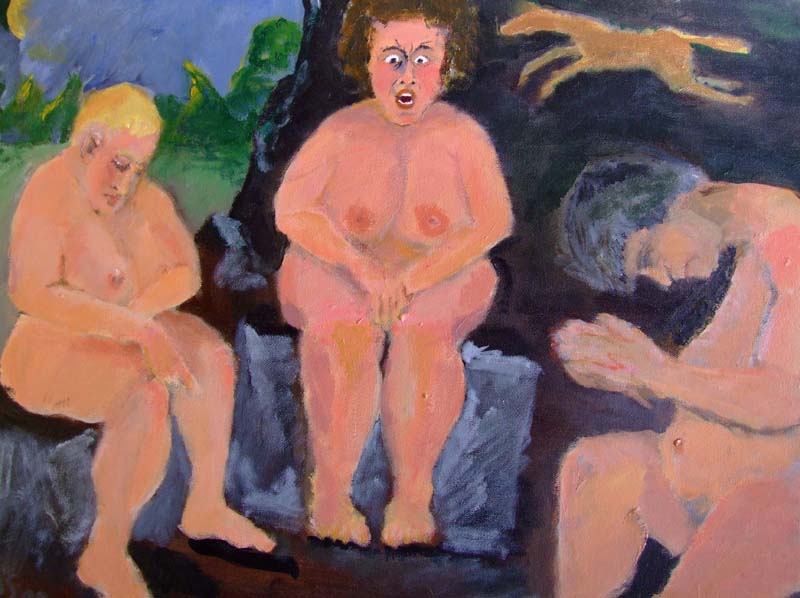
Feminine Matrix – Female Culture and Humanity – The War Never Ends
News from the Field Fall 2003 Battered by incessant wars and rapes since Bronze Age, females are in deep shock and have amnesia regarding female culture and female humanity. Imbedded from thousands of years of genocide practices, fear, generations long, has become this amnesia and female silence. 2003 was a crisscrossing of the globe. In January and February I was in Sri Lanka the exact time a peace treaty was signed declaring an end to 22 years of war. However, I have witnessed as other women have that the war never ends. In June and July, I was in Bombay/Mumbai India and back to Bosnia. In Bosnia, I facilitated the annual “Peaceful Dimensions Against Gender Violence,” conference in Novi Travnik, Bosnia. Again, I witnessed how the war never ends for women despite having multinational troops stationed in Bosnian cities for over 8 years now. Mumbai had female beggars with children so thin that I thought I was looking at sticks. My kolo (Bosnian for circle or to dance) work in these places allows females to remember their wisdom so that they become self-sustainable not only economically but also emotionally. The kolo work ennobles females to deal with their traumas by tapping into our inherent female culture and roots. Battered by incessant wars and rapes since Bronze Age, females are in deep shock and have amnesia regarding female culture and female humanity. Imbedded from thousands of years of genocide practices, fear, generations long, has become this amnesia and female silence. The Bosnian women, called ‘Sumejja Kolo,’ have been in the kolo program since March 1999 and ten of them have become certified kolo advisors. The women become empowered once the amnesia is broken. How? The Sumejja Kolo marched for garbage pickup in their town of Novi Travnik, and facilitated kolo meetings with war crimes survivors in Vittez-Amijca, Jayce, Zenica and Sebrenica. To facilitate a kolo gathering the necessary ingredients of coffee cups, coffee cup readings and other women’s divinatory arts such as the Slavic 41 white beans and first person stories are strongly present. The shock triggers memory when hearing other female’s first person story. More climatic then a massive earthquake, bearing witness to the Bosnians and in Sri Lanka first person stories one becomes conscious at how universal and how webbed we really are to each other. Tamils, Hindus, Singhalese, Bosnian Muslims, all females spoke in exact detail the same war crime the world over. The hatred of anything female is murdered, assaulted, denigrated and made invisible. At one of the kolo meetings in Bosnia, an elder white haired woman with huge reading glasses sucked up her crying to state how she just realized her mother could not show her love as she has done with her children. Wringing her tissue she declared the war never ends. Do females blame the war for not being able to love their children especially their daughters? Often the Bosnian women remark how it was better during the war then now. I always wonder with that remark if that is why we have incessant wars. Countless times, my soul inquires where are the women, the earth wide sisterhood? How is it that we as females are in denial of catastrophic rape statistics, murders and global wars declared not on countries, armies or ruling male governments but on homes (wombs archetypal), families and children? More money was spent in developing a tank that shears homes in half for the Israeli army then for humanitarian aid efforts there. Female culture and Female humanity embraces solidarity usually only in times of war, traumas and crisis. The kolo work allows for solidarity and support to occur in times of need, advocacy and concern for all sisters earth wide. If you are interested in collaborating for solidarity and to break the amnesia -female silence please consider a donation or your services for the kolo work and the nonprofit ‘The Kolo: Women’s Cross Cultural Collaboration.” The annual “Peaceful Dimensions’ Conference,” held annually in Novi Travnik, has international female visitors from other countries bearing witness to Bosnian female’s war and first person stories. Join me for that work/study tour and make a difference in your life and the earth. Become visible. Check the Baba Yaga Section of this website and read first person story accounts of the Sumejja Kolo. Your donation to them will be heartfelt. A fund towards a ‘safe place’ for females in the town of Novi Travnik is one dream. Air miles for the Bosnian certified kolo advisors and for myself to provide more training is very needed. Donations can be tax exempt through the nonprofit The Kolo: Women’s Cross Cultural Collaboration. Even $10 goes such a long way if each of us donated. Women can heal the earth and stop the war that never ends. Feminine Matrix is requesting articles from females who are advocating, bearing witness to the war that never ends. We will publish the article that proclaims and understands the depth of bearing witness, solidarity and support for female culture and female humanity.
Restoring Women to Cultural Memory
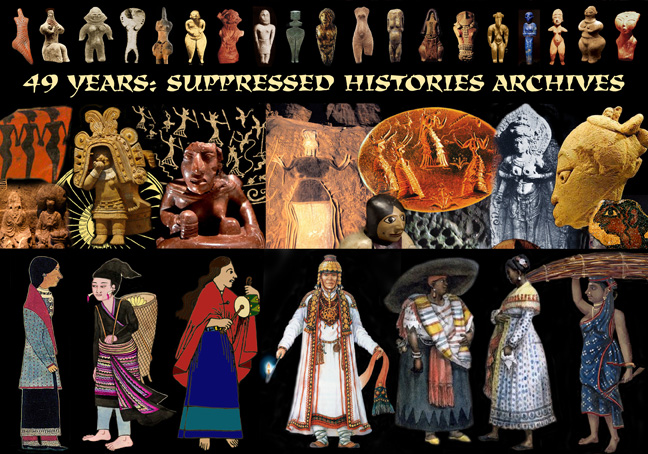
[fusion_builder_container hundred_percent=”no” equal_height_columns=”no” menu_anchor=”” hide_on_mobile=”small-visibility,medium-visibility,large-visibility” class=”” id=”” background_color=”” background_image=”” background_position=”center center” background_repeat=”no-repeat” fade=”no” background_parallax=”none” parallax_speed=”0.3″ video_mp4=”” video_webm=”” video_ogv=”” video_url=”” video_aspect_ratio=”16:9″ video_loop=”yes” video_mute=”yes” overlay_color=”” video_preview_image=”” border_size=”” border_color=”” border_style=”solid” padding_top=”” padding_bottom=”” padding_left=”” padding_right=””][fusion_builder_row][fusion_builder_column type=”1_1″ layout=”1_1″ background_position=”left top” background_color=”” border_size=”” border_color=”” border_style=”solid” border_position=”all” spacing=”yes” background_image=”” background_repeat=”no-repeat” padding_top=”” padding_right=”” padding_bottom=”” padding_left=”” margin_top=”0px” margin_bottom=”0px” class=”” id=”” animation_type=”” animation_speed=”0.3″ animation_direction=”left” hide_on_mobile=”small-visibility,medium-visibility,large-visibility” center_content=”no” last=”no” min_height=”” hover_type=”none” link=””][fusion_text] “Women are the Footnotes’ Footnote”- a must see video for all females – especially daughters. The influential study conducted through vast materials highlighted the invisible sex and the relationship of a certain empowerment women are naturally endowed with to that of cultural memory. This video was shared by Max Dashu, founder of Suppressed Histories Archives. [/fusion_text][/fusion_builder_column][/fusion_builder_row][/fusion_builder_container]
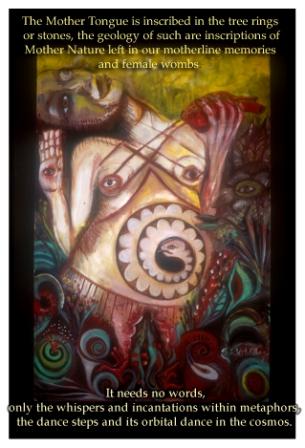
Is there only silence for our daughters?
Is there only silence for our daughters? Republish from 11-18-2007 In excavating motherhood, it is startling to realize how celebratory ancient matrifocal systems were, and that there was no lag time in responding to the needs of the female gender. In “Old Europe” (7th to 3rd Millennia B.C.E.) Slavic peoples held reverence with Moist Mother Earth. In cognitive archeology, this reaffirmed the motherhood concept and its evolving symbolism that is threaded through the generations of daughters descending from our first mother in Africa. Just as a female’s mitochondrial DNA remains unchanged through thousands of generations, motherhood at this time was defined by daughters and mothers who could not be diluted and rendered useless. The social configuration characteristic of a Great Mother society was an era of great peace and absent of violence directed at females. Our daughters were esteemed and valued. Geneticist Bryan Sykes researched the same ancient eras and peoples whose clan mothers provided the maternal DNA (mitochondria) which evolved into our modern day species. Described by Sykes, clan mothers are defined as having two daughters in order for the random mutation to occur in mitochondria DNA. Sykes addressed how female biology evolved in the Paleolithic era and then again in Neolithic era, but pointed to how the “real power of mitochondrial DNA is that it is not diluted by distance.” (Seven Daughters of Eve, p.67) Since then, we have not evolved, and evolution appears to be stuck in the muck of violence while motherhood is now defined by patriarchs. Having manifested culture and communities, mothers and daughters knew that the earth, their homes, and how they lived their lives would be the womb that accelerates evolution. Motherhood and evolution was conceptualized in the Paleolithic and Neolithic era, which was strewn with many Great Mother Goddess figurines and round bellied stoves and hearths. In excavating motherhood, it is startling to realize how celebratory ancient matrifocal systems were, and that there was no lag time in responding to the needs of the female gender. When future scientists research statistics and articles about our daughters’ earthwide, I wonder how our generation of daughters will reflect Mother’s day. Their story would reveal an epidemic of violence against their female sex. The archeological ore of modern day would pose a violent symbolism for future archeologists. This Mother’s Day I am met with one daughter from Pakistan, Mukhtar Mai, the slender 32 year old who was ganged raped by men in her village as a reprisal against her 13 year old brother who had sexual relations with a member of their tribe. The rapists were released and her relatives, whose advice was to accept money and not go to court, smugly felt vindicated. Her uncle was reported to have confronted her with the fact that not even the courts could protect her. Where are the mothers to protest this sanction, not only for Mukhtar Mai, but for the thousands of years it took for blaming and shaming the daughter to become the accepted cultural attitude of our modern world. Is there only silence for our daughters? The lag time is impossible to comprehend when it concerns the female sex and daughters. As in the case of Mukhtar Mai’s and that of 300 Mexican women murdered in Warez, there has been no swift justice and the perpetrators have been wandering free for many years. A raging war in the Balkans elicited an international War Crimes tribunal law stating that rape is ‘now’ a war crime and yet the Bosnian mothers shrug their shoulders when met with another story of sexual abuse, sexual harassment at the hands of boyfriends, fathers, and in one case the director of a high school. Lag time is a result of apathy. It came to my attention and that of a Bosnian mother whose own two daughters went to the same high school, that there was a besieged Bosnian female teenager who was molested by the high school director in central Bosnia The Bosnian mother grew excited when I presented to her the dire situation. Thinking she would respond quickly and mobilize a movement with other mothers to finally oust and hold this school director accountable, I initially mistook her feverish delight as a celebratory embrace towards mothering but instead it was simply about being able to point out to me, “See how we live.” The beginning of ‘lag time’ started ticking for this besieged Bosnian teenager and for other sexually assaulted Bosnian teenagers that attended the same high school. They were forced to swim in an ocean of inaction and frank apathy with each new rape. Interestingly, one group of women in the same Bosnian village marched for regular garbage pick up but did not march for the protection of their daughters or to hold males accountable. Does this mean this daughter who spoke her story of sexual abuse from the high school director is less then garbage? Mothers are so busy with the religious cries that beseechingly point out, “see what we have to live with and put with,” that they do not cry out for the safety of their daughters. The energy expended in living out patriarchal values certainly halts any evolving and defining motherhood by daughters. Sanctions on daughters are stated as ‘abortion is murder’, or adultery and rape are the fault of the female sex. Heaping blame on to women/daughters appears to be a luxury women cannot hold on to since religious sanctions are the arsenal in gynocidal measures and its consequences. The espoused mighty moral causes which kill daughters and kill any random chance of the biological evolution that happened twice in eras that were termed as primitive by patriarchs, are promoted by the mothers themselves as sanctions and in androcratic systems. Mothers according to the worldwide statistics are apathetic to life threatening violence towards their daughters. Or else how would 60 million women/daughters go missing (Amnesty International)? As with Mukhtar Mai, the gang of male rapists is not held accountable in the resulting
Utilizing First Person Story with Trauma Survivors in Bosnia and Sri Lanka
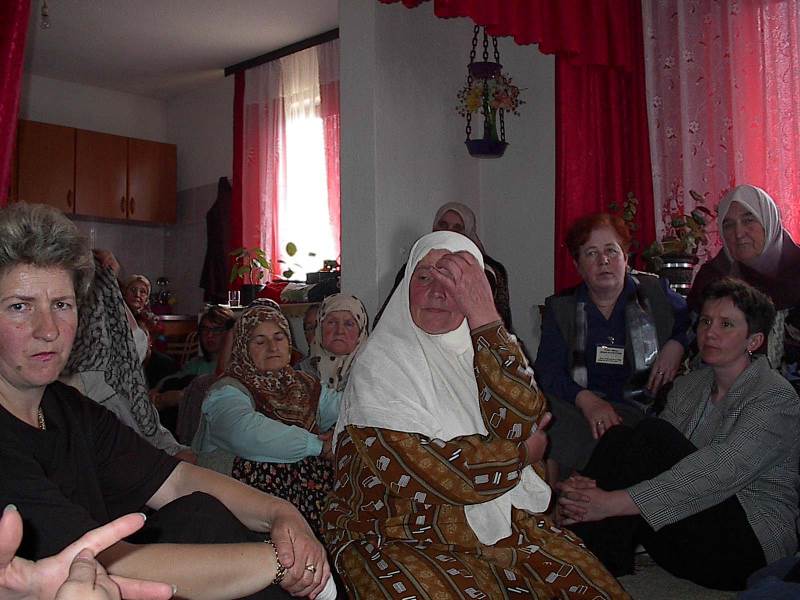
[fusion_builder_container hundred_percent=”no” equal_height_columns=”no” menu_anchor=”” hide_on_mobile=”small-visibility,medium-visibility,large-visibility” class=”” id=”” background_color=”” background_image=”” background_position=”center center” background_repeat=”no-repeat” fade=”no” background_parallax=”none” parallax_speed=”0.3″ video_mp4=”” video_webm=”” video_ogv=”” video_url=”” video_aspect_ratio=”16:9″ video_loop=”yes” video_mute=”yes” overlay_color=”” video_preview_image=”” border_size=”” border_color=”” border_style=”solid” padding_top=”” padding_bottom=”” padding_left=”” padding_right=””][fusion_builder_row][fusion_builder_column type=”1_1″ layout=”1_1″ background_position=”left top” background_color=”” border_size=”” border_color=”” border_style=”solid” border_position=”all” spacing=”yes” background_image=”” background_repeat=”no-repeat” padding_top=”” padding_right=”” padding_bottom=”” padding_left=”” margin_top=”0px” margin_bottom=”0px” class=”” id=”” animation_type=”” animation_speed=”0.3″ animation_direction=”left” hide_on_mobile=”small-visibility,medium-visibility,large-visibility” center_content=”no” last=”no” min_height=”” hover_type=”none” link=””][fusion_text columns=”” column_min_width=”” column_spacing=”” rule_style=”default” rule_size=”” rule_color=”” hide_on_mobile=”small-visibility,medium-visibility,large-visibility” class=”” id=”” animation_type=”” animation_direction=”left” animation_speed=”0.3″ animation_offset=””] The dead are powerfully alive in the commemoration rituals and intervene in the world of the living in benevolent forms such as hostessing a kolo. “Utilizing First Person Story with Trauma Survivors in Bosnia and Sri Lanka: Metaphors create a symbolic congruence that is ‘inclusive’ and universal across cultures Recognizing their participation in events is not at all about being responsible for the violent encounters that lead to trauma. When we embrace the instructional nature of trauma we find we are evolving. Rather if the stabbing ‘why me’ was embraced as instructional, we would be facing the truth of “what do we feel about ourselves?” At this point, we can change our perception and look up to see the whole world has changed. Their stories weave the thread of life. In the last hundred years life on the planet has been rife with continuous wars and natural catastrophes compiling never before told ‘first person’ stories on a horrific scale. What is a first person story? In essence, it is the ‘unplugged’ version of one’s first hand experience that weaves itself into one’s her/history. Nowhere is this more evident than when one re-counts the traumatic events of their lives. Germaine Greer states that first person is in actuality ‘feminism.’ Books, journals and other media venues have not arrayed a collection on women’s first person stories unless it can be reduced to a ‘sound bite’, 300 hundred word essay or the normal victim role for women bathed in silence. “We are confronted with the slaughter of Eve, a systematic gendercide of tragic proportions,” expresses author Theodore Winkler of “Women in an Insecure World.”1 We are discovering how trauma is a normal day and fear ridden night for most females globally since there is a reported 200 million shortfall of women as a result of gendercide2 . The research, studies and the carefully calculated numbers do not speak their first person stories. Yet, it is their stories that contain the key to living with trauma and evolving rather than to submit to the voracious violence. The arbitrary form of trauma studies, research and statistics erases the human being’s life experience. Ironically, the purpose of the trauma studies and research are to heal traumatic events and to understand trauma. Grappling with the ever widening abyss between what is reported in strict scientific measures and genocidal slow justice systems do not partner the truth that trauma is best healed through first person story and witnessing/hearing the trauma survivors’ life experience. It is only in speaking and sharing one’s life experiences to others who can actively listen that commences the healing process. Frank Ochberg’s Counting Method includes the trauma survivors’ first person story in a psychological science field stuffed with all the arbitrary forms found in studies/research which neuter the first person story content, readdresses the imbalance. Despite the neutering process, the Counting Method ensures its viability in the treatment of trauma. Certainly, when in the field (Africa, Bosnia, India, Sri Lanka) the ‘Counting Method’ confronts denial and allows the stark reality of the trauma survivors’ life experience to become an intensive learning cycle/phase for the individual and for all who bear witness to it. The Counting Method allows expression of silence and reflection into first person story and narrative. Frank Ochberg stated, “I would point out that the counting method is not really a first person narrative, but the silent experience of trauma, relived by the survivor in the presence of the therapist. Memory “speaks” without words. Then, afterward, the survivor and the therapist together review what has just been experienced.” It appears the foremost approach is to deny or silence first person stories’ values within the scientific methods and logodial media that are aimed at avoidance to listening and metabolizing first person stories. Often couched as polite backing away or “not the right data” for science methods or rule of law justice systems, the worshipped methodology only serves to enforce the professional distance towards any description of the drama/trauma or first person story through; the avoidance methods are found in mountains high paper work, proper sterile environment such as having a desk or certifications between the professional and individual or approved vocabulary contained in lectures and rule of law that is not that of the individual with their first person story; the denial methods that silences first person story and maintains the worthless ranking in our sciences to obscure the potency found in expressing life experiences. All women’s experiences are personal and political so a statement such as – ‘we do not speak politics’ silences women’s first persons’ story sealing their fate. If Trauma therapists and those who would bear witness to first person stories knew that they were able to manifest a healing culture by understanding how trauma is actually an intensive breakthrough learning cycle/phase, what would our learning approaches and healing practices look like. If approached with the deep knowing that trauma is a wounding that leads to new possibilities and evolving life, the intensive learning instructs through the meaningful and empowering drama/trauma involving four interactive cardinal points often observed as: guilt shame martyrism fear The four interactive cardinal points observed in the field work that I have done in- Africa, Bosnia, India and Sri Lanka — if embraced sets up an immediate intensive learning environment where each individual is paying great and acute attention. It does not matter that the appearance of intensive learning occurs without a structured classroom, walls of a building. Instead within the four interactive cardinal points the intensive learning is erected instantly stabbing
MESOLITHIC KOLO ROUND DANCE AND LABAN SYSTEM
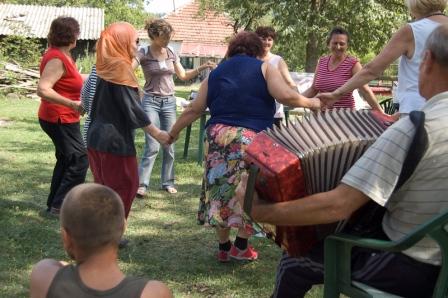
MESOLITHIC KOLO ROUND DANCE AND LABAN SYSTEM Tracing the Phenomenology of South Slavic Landscape and Body Movements inter- related to Laban Notation System By Danica Anderson Abstract The origins of the kolo, a South Slavic round dance or to be in a circle (Hubbs, 1993) are Mesolithic intangible heritage. Surviving exploitation as touristic folk dances only in modern day, the ritual round dance organizes what the past peoples observed and lived that serve the needs and interests of our present lives. The Laban system descriptive and iconic graphing of movement, a way of preserving body movements, privileges both a visual repeating encounter with the symbolic notations and that of the body movements; the conflagration of iconic movements in the kolo is, also, organized into preservation of body movements. The kolo (2005) is essentially, an ethnochoreological lived circle or round dance and a living movement practiced continually throughout the ages in its visual and body movement presentation requiring preservation and research of its lived applications. South Slavic Kolo and Knust-Laban Notation A new philology burst forth in the 1990’s with the Knust-Laban’s notation (also known as Labanotation) that was integrated into the study of the South Slavic Kolo, round dance or to be in the circle. Researchers in body movement to ethnology demanded intensive scientific methods in preserving the physical movements/dance to cultural landscapes and it found that the Laban methodology lends a fuller descriptive survey and understanding of the South Slavic kolo─ round dances properties and practices. The milieu and activities of the kolo when interleaved with Laban allows multiple reinterpretations of the living kolo monuments from the Slavic ancestors. The Laban Notation as a tool for ethnological exploration of the kolo assisted researchers of the kolo to be culturally specific, inclusive of her/historical perspective fostering an interpretive modern scholarship. The serious pioneering attempts in Serbian Ethnochoreology by two Serbian (South Slavic-formerly Yugoslavs) sisters, Danica and Ljubica Jankovic, in the 1930’s, (Jankovic, 1934, 1952) to preserve intangible heritage, commenced to document the kolo for pattern, rhythm, and melody of the steps into graphs and diagrams. Ethnochoreology is the description of ethnicity, culture or long term memorialization practices –mnemonic activities- such as daily body movements capsulated and ever evolving into the kolo with multivalent symbolic choreography. The written page can transmit only so much of the South Slavic spiritual and embodied intangible heritage commemorative meanings of the kolo but for the Jankovic sisters the body and body movements in the kolo are the written pages. The kolo is a mega-library of ethnochoreographic body movements enlisting an oral heritage tradition in two steps: 1) A careful examination of the phenomenon to be able to re-create the past with current generation’s body movements and; 2) Life experiences that is included each time the kolo is danced and manifesting a sense of place and space (Bachelard 1964). Indigenously for the Serbian Jankovic sisters in the recording, recovery and restoration of kolo folk dance movements (Jankovic, 1934, 1952) with the Labanotation application, both expressed the same immediate understanding without words the body movements and resulting rhythm. The Slavic peoples with their oral heritage practices are memories suffused with human life but the kolos were considered primitive. The preservation of ancient oral traditions most likely resulted from the astounding fact that the Serbo-Croatian language did not have an alphabet until the late 1800’s (O ‘Beirne, 1921). The Jankovic sisters argued that oral traditions easily contained all past and current body and life experiences in its static or natural state in extraordinary iconic properties in the somatic or living kolo while libraries of information and science has not preserved into the present moment past her/historical and ethnological patterns. The Laban notation system lends itself to the preservation of the kolo’s iconic and symbolic properties. The South Slavic peoples with prodigious memory abilities, orally organized; the recall of intact memories is mnemonically recalled and recreated with the body movements in the kolo and with accuracy throughout thousands of generations. However, intangible heritage such as the South Slavic oral traditions practices needed a receptacle that had keys to the esoteric meanings of the kolo. Their art of storytelling and South Slavic storied instructions is done through descriptive movement inclusive of culturally specific to landscape and peoples (Van Dyke, Alcock, 2006) as opposed to comparisons, semantics or disembodied scientific analysis. In the 1930’s the Jankovic sisters utilized auxiliary signs, diagrams and graphs to chart the round dances-kolo (Jankovic, 1934, 1952). The eight book series in Serbo-Croatian with authors unknown called Nadrodne Igre have an immediate understanding of the intangible heritage and ethnochoreology practices explored in the kolo (Bajic, 2006). The literal translation of the title Nadrodne Igre is ‘people’s play.’ Kolos are akin to Dance/Movement Therapy and strongly aligned with Laban and Bartenieff avoidance of a “mechanistic approach to movement which they considered not only inefficient but also harmful for individual’s self-image.” (Knaster, 1996) Interestingly, the accompaniment to the kolo is the South Slavic ‘Women’s songs.’ The kolo, a South Slavic intangible heritage in commemorative approaches to include music and songs immediately relate as being the same science of observing and recording both body movements and that of the landscapes in the kolos. Observing reoccurring patterns in nature, in our bodies, life experiences ultimately for the South Slavs evolved into a movement epigraphy ”memory and locality conjoin in this instance and gather force in the return to a past lived landscape…” (Van Dyke, Alcock, 2006). However, what is exclusive to the Serbian round dances-kolos, are the diverse individual leg movements-steps which is distinctive in the intangible kolo heritage capturing each unique fingerprint of the dancers both past and present (Jankovic, 1934, 1952). Capturing the unique footprints mirroring our “no two alike” fingerprints is a significant ethnochoreological endeavor in line with Mother Nature’s sense of order. Within Laban analysis the focus is, also, toward the inner energy merged with the movement behaviors that specifically points to time as sudden or sustained and space as direct or indirect (Knaster, 1996). What
“Why Music?” a short interview with Bosnian folksinger, Mary Sherhart
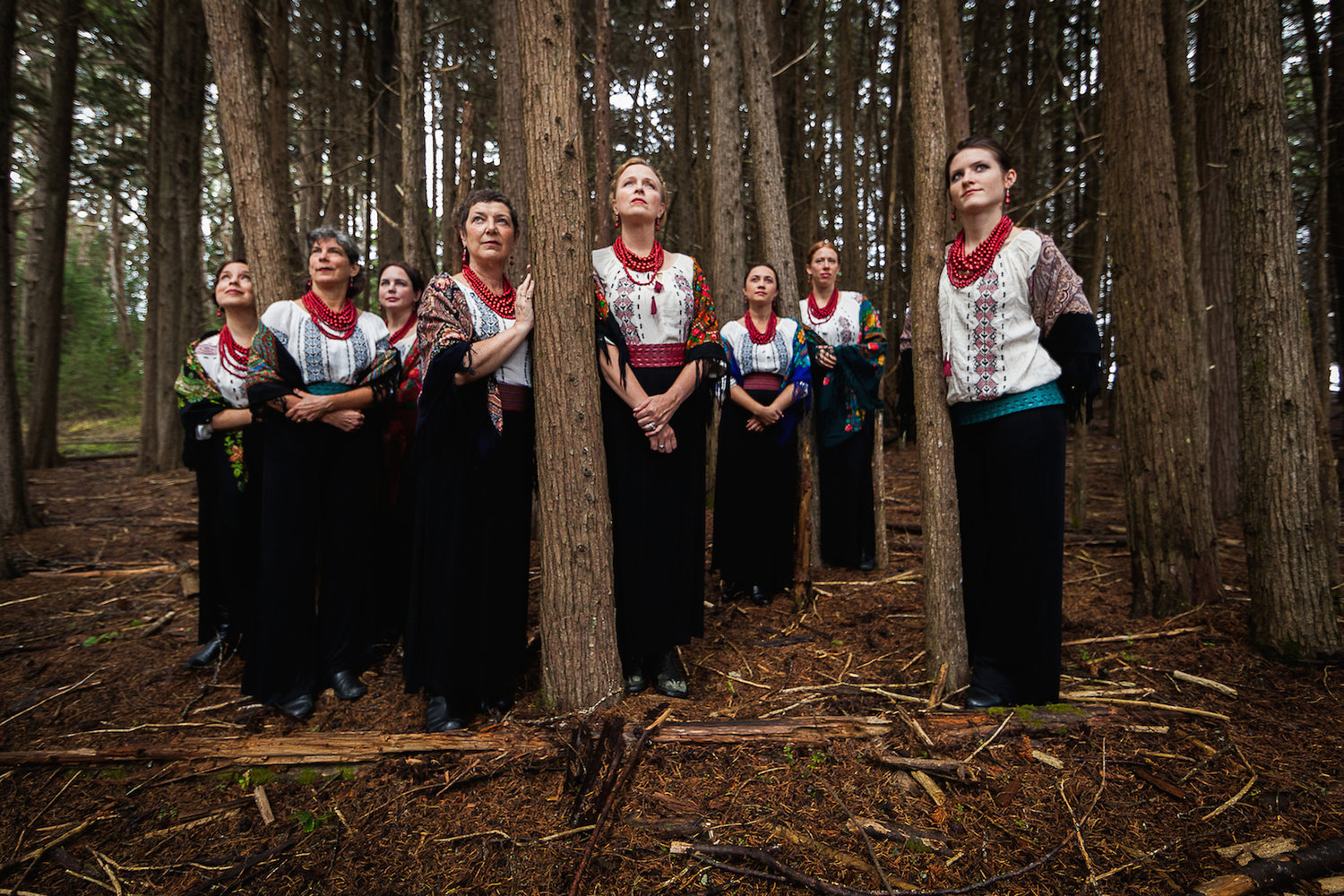
[fusion_builder_container hundred_percent=”no” equal_height_columns=”no” menu_anchor=”” hide_on_mobile=”small-visibility,medium-visibility,large-visibility” class=”” id=”” background_color=”” background_image=”” background_position=”center center” background_repeat=”no-repeat” fade=”no” background_parallax=”none” parallax_speed=”0.3″ video_mp4=”” video_webm=”” video_ogv=”” video_url=”” video_aspect_ratio=”16:9″ video_loop=”yes” video_mute=”yes” overlay_color=”” video_preview_image=”” border_size=”” border_color=”” border_style=”solid” padding_top=”” padding_bottom=”” padding_left=”” padding_right=””][fusion_builder_row][fusion_builder_column type=”1_1″ layout=”1_1″ background_position=”left top” background_color=”” border_size=”” border_color=”” border_style=”solid” border_position=”all” spacing=”yes” background_image=”” background_repeat=”no-repeat” padding_top=”” padding_right=”” padding_bottom=”” padding_left=”” margin_top=”0px” margin_bottom=”0px” class=”” id=”” animation_type=”” animation_speed=”0.3″ animation_direction=”left” hide_on_mobile=”small-visibility,medium-visibility,large-visibility” center_content=”no” last=”no” min_height=”” hover_type=”none” link=””][fusion_text columns=”” column_min_width=”” column_spacing=”” rule_style=”default” rule_size=”” rule_color=”” hide_on_mobile=”small-visibility,medium-visibility,large-visibility” class=”” id=”” animation_type=”” animation_direction=”left” animation_speed=”0.3″ animation_offset=””] Mary Sherhart venerates the ritual practices and social memory oral traditions of the South Slavs that is often coupled with larger festive event and performances. The Kolo, (round dance or to be in the circle) is filled with the love of music and dance. The effect is to heighten festivals as fundamentally acts of commemoration and remembrance. The songs and kolos are mnemonic practices of South Slavic oral traditions that share two universal features of community and social ceremonies. [/fusion_text][/fusion_builder_column][/fusion_builder_row][/fusion_builder_container]
Afghanistan – Sept. 2014, Vlog with Dr. Danica Anderson
[fusion_builder_container hundred_percent=”no” equal_height_columns=”no” hide_on_mobile=”small-visibility,medium-visibility,large-visibility” background_position=”center center” background_repeat=”no-repeat” fade=”no” background_parallax=”none” parallax_speed=”0.3″ video_aspect_ratio=”16:9″ video_loop=”yes” video_mute=”yes” overlay_opacity=”0.5″ border_style=”solid”][fusion_builder_row][fusion_builder_column type=”1_3″ layout=”1_1″ background_position=”left top” background_color=”” border_size=”” border_color=”” border_style=”solid” border_position=”all” spacing=”yes” background_image=”” background_repeat=”no-repeat” padding=”” margin_top=”0px” margin_bottom=”0px” class=”” id=”” animation_type=”” animation_speed=”0.3″ animation_direction=”left” hide_on_mobile=”small-visibility,medium-visibility,large-visibility” center_content=”no” last=”no” min_height=”” hover_type=”none” link=””][fusion_text]Dr. Danica Anderson is attached to the International Criminal Court since 2005 working war crimes assessments with investigative teams in Sub-Sahara Africa. For Bosnia, her nonprofit The Kolo: Women’s Cross Cultural Collaboration, she has done over 17 years of train the trainer in the Kolo informed trauma care practices. This video is of Danica’s first-hand account from a mission in Afghanistan, 2014 giving insight to her work.[/fusion_text][/fusion_builder_column][fusion_builder_column type=”2_3″ layout=”1_1″ background_position=”left top” background_color=”” border_size=”” border_color=”” border_style=”solid” border_position=”all” spacing=”yes” background_image=”” background_repeat=”no-repeat” padding=”” margin_top=”0px” margin_bottom=”0px” class=”” id=”” animation_type=”” animation_speed=”0.3″ animation_direction=”left” hide_on_mobile=”small-visibility,medium-visibility,large-visibility” center_content=”no” last=”no” min_height=”” hover_type=”none” link=””][fusion_text][/fusion_text][/fusion_builder_column][/fusion_builder_row][/fusion_builder_container][fusion_builder_container hundred_percent=”no” equal_height_columns=”no” hide_on_mobile=”small-visibility,medium-visibility,large-visibility” background_position=”center center” background_repeat=”no-repeat” fade=”no” background_parallax=”none” parallax_speed=”0.3″ video_aspect_ratio=”16:9″ video_loop=”yes” video_mute=”yes” overlay_opacity=”0.5″ border_style=”solid”][fusion_builder_row][fusion_builder_column type=”1_3″ layout=”1_1″ background_position=”left top” background_color=”” border_size=”” border_color=”” border_style=”solid” border_position=”all” spacing=”yes” background_image=”” background_repeat=”no-repeat” padding=”” margin_top=”0px” margin_bottom=”0px” class=”” id=”” animation_type=”” animation_speed=”0.3″ animation_direction=”left” hide_on_mobile=”small-visibility,medium-visibility,large-visibility” center_content=”no” last=”no” min_height=”” hover_type=”none” link=””][fusion_text] Dr. Danica Anderson, Dept of Defense social scientist was based at the forward operating base Torkham located on the border of Afghanistan and Pakistan. Around 5 AM Dr. Anderson was thrown from her bunk after the explosion of a truck parked about 500 meters from her barracks. Suicide attackers battled for over 5 hours. No casualties for those on the base. [/fusion_text][/fusion_builder_column][fusion_builder_column type=”2_3″ layout=”1_1″ background_position=”left top” background_color=”” border_size=”” border_color=”” border_style=”solid” border_position=”all” spacing=”yes” background_image=”” background_repeat=”no-repeat” padding=”” margin_top=”0px” margin_bottom=”0px” class=”” id=”” animation_type=”” animation_speed=”0.3″ animation_direction=”left” hide_on_mobile=”small-visibility,medium-visibility,large-visibility” center_content=”no” last=”no” min_height=”” hover_type=”none” link=””][fusion_text][/fusion_text][/fusion_builder_column][/fusion_builder_row][/fusion_builder_container]
Creepy Normalization Man”u” Fractures Amnesia of What Sustains Us All
Creepy Normalization man”u”factures Amnesia of what sustains us all What I learned from my travels of 2007 & 2008 into Africa and Bosnia Amnesia-Blindness Affliction When I heard the pain in her Congolese narrative, when I felt the sharpness of sight uncensored, absent of amnesia, my inward gasp announced shock at what others encounter in their days and nights. Almost involuntarily, I sought the origin of crisis, disasters and violence, with the ages’ old question: “How did we get to this point?” What I discovered as I looked for the mouth of the river called violence is in reality the universal and common to all. No matter where, whether I walk the landscape of Africa, Bosnia, India or Sri Lanka, even the United States, most of us find that it is literally imperceptible to discern how it commenced. The smallness and perhaps subatomic aspects of actions or a lack of actions has metabolized into blindness affliction that may be best articulated as amnesia. Amnesia is a blindness affliction producing the creepy normalization of what would be anathema to us. In reflection of my journeys to Africa and Bosnia, I would encounter sheer madness since most have amnesia on what sustains us and our planet. I discovered that whatever our female values are, those feminine aspects are not known as a way of life across the globe. Instead, the blindness affliction helps to spin doctor, the destruction and violence ritualized practices of rape, war and conflict into the phrase,” culture.” Take for instance, in the Congo, the degrading poverty spirals into impossible lowest levels with each outbreak of violence. Each rape is pronounced as the militia or rebel army’s right for fighting delusional evil in others and what the women must gratefully submit to. Stated as “it is the way it is,” by the women, themselves, spins it into a cultural event despite having rape listed as a war crime in the international court. “They come from the underneath the banana or Mango trees. We are told that we are helping the fight and taking care of the men who have needs,” spoke the downcast eyes and face of a Ugandan woman. Outside any hotel in downtown Kampala, Uganda has very young prostitutes soliciting their bodies for money to eager tourists from abroad or nearby countries. Supposedly, enlightened and liberal westerners think that prostitution should be a business commodity. As I walk by the barely thirteen year old Uganda girl-child, slick with cosmetics and provocative outfit, I wonder how any mother would really think it’s a business. The loss of female values and culture impounded with the most severe disrespect and disdain of her body is often okay with mothers. Creepy normalization in misogynistic edicts Let’s turn to how the economic disparity makes for a mother’s desperation. Then, let’s look at how religious male perspective dogma swallowed by faithful mothers allows for objectified female bodies due to being mimicry for worship and/or fond regard for females. Who wouldn’t want to be Daddy’s little girl all her life as opposed to her mother’s unlived life modeled to her as a male ideologist and peon, when statistics scream about our daughters’ incestuous unions with her father or rape objects’ for males ? Now, we move to religious mother’s beliefs that all daughters need legislation and extreme male outside authority/system to tell her how to be the perfect victim. Laws are tailored made to legislative her uterus. Other forms of rule of law are the creepy normalization in misogynistic religious edicts of her female sex on how to dress and even where to sit in her substandard place. I think of the Serbian Orthodox liturgy services, she must sit on the left while he is given the ‘right,’ along with not allowing her communion if she has her menses. There is a ritual for mothers after she births her child. She must be blessed by the priest when she finishes her birthing blood flow before setting foot into the “holy” halls. In the catholic sector, priests reign in sexual abuse of both sons and daughters and demand no woman behind the altar. When the last pope died -who reigned over the most hideous sexual exploitation by his priestly following- it was mostly women weeping beyond the pale and kissing his photo as his decaying corpse was hauled off into the moist mother earth. It is no wonder why mothers would not know immediately how it is exploitation via poverty of a barely tolerated female gender, that the culture with creepy normalization gives two choices to daughters: either marries to be either Madonna or make money and be the whore. I have yet to observe or hear about any mother’s outrage at her or other women’s poverty. Neither are her daughter nor son’s exploitation and her female gender splashed in media or the news except for being pornographic titillating victim material. It’s everywhere. In the states we do not see Sarah Palin bothered by her female sex being exploited as she continues the worship fathers and the male kingdom. It’s about the creepy normalization that this is what women want, what women need and most importantly being told who they are by outside ‘male perspective only’ authorities. Moist Mother Degradation coincides with HER degradation-an opportunity for female solidarity? Did you ever wonder how the creepy normalization of what the earth and its sea and landscapes once beheld became denuded deserts and red tide oceans? It had to take generations of abuse and caustic practices to deplete the vast oceans into cesspools of plastic, garbage and chemical spillage. Our blindness affliction-amnesia is superimposed on Rachel Carson’s 1962 clarion call of the coming “Silent Spring.” Is it because she is female that we are blind to Rachel Carson’s message and her prophecy? Forests once populated much of the global landscapes a mere 8,000 years ago. Even if we look at photos fifty to one hundred years ago, we see how the trees protect
UN PeaceKeepers Involved in Congo War Atrocities
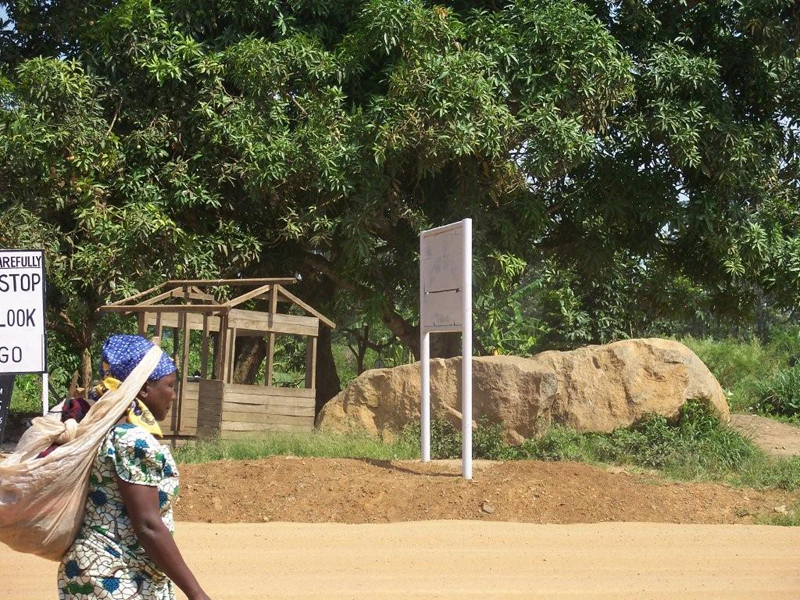
[fusion_builder_container hundred_percent=”no” equal_height_columns=”no” menu_anchor=”” hide_on_mobile=”small-visibility,medium-visibility,large-visibility” class=”” id=”” background_color=”” background_image=”” background_position=”center center” background_repeat=”no-repeat” fade=”no” background_parallax=”none” parallax_speed=”0.3″ video_mp4=”” video_webm=”” video_ogv=”” video_url=”” video_aspect_ratio=”16:9″ video_loop=”yes” video_mute=”yes” overlay_color=”” video_preview_image=”” border_size=”” border_color=”” border_style=”solid” padding_top=”” padding_bottom=”” padding_left=”” padding_right=””][fusion_builder_row][fusion_builder_column type=”1_1″ layout=”1_1″ background_position=”left top” background_color=”” border_size=”” border_color=”” border_style=”solid” border_position=”all” spacing=”yes” background_image=”” background_repeat=”no-repeat” padding_top=”” padding_right=”” padding_bottom=”” padding_left=”” margin_top=”0px” margin_bottom=”0px” class=”” id=”” animation_type=”” animation_speed=”0.3″ animation_direction=”left” hide_on_mobile=”small-visibility,medium-visibility,large-visibility” center_content=”no” last=”no” min_height=”” hover_type=”none” link=””][fusion_text columns=”” column_min_width=”” column_spacing=”” rule_style=”default” rule_size=”” rule_color=”” hide_on_mobile=”small-visibility,medium-visibility,large-visibility” class=”” id=”” animation_type=”” animation_direction=”left” animation_speed=”0.3″ animation_offset=””] Congolese woman walks in Benin. The mass rapes in Congo DRC continue unimpeded by the International Criminal Court for war crimes. “YOU WILL BE PUNISHED” – REPORT Attacks on Civilians in Eastern Congo This 183-page report documents in detail the deliberate killing of more than 1,400 civilians between January and September 2009 during two successive Congolese army operations against a Rwandan Hutu militia, the Democratic Forces for the Liberation of Rwanda. The UN writes its own report and barely outlines in detail which of its PeaceKeepers committed the war atrocities with Congolese army operations against a Rwandan Hutu militia, the Democratic Forces for the Liberation of Rwanda. Link to Full Human Rights Watch Report UN peacekeepers made important efforts to protect civilians in this complex and difficult terrain, Human Rights Watch said. But the peacekeeping force’s role as a joint player in the military operations, providing substantial support to the Congolese army, has implicated peacekeepers in the abuses and undermined the mission’s primary objective, which is to protect civilians. Some victims were tied together before their throats were, according to one witness, “slit like chickens.” The majority of the victims were women, children, and the elderly. The FDLR first raped the mother and inserted a large stick in her vagina causing serious injury which led to her death. When the young girl cried out in distress, the FDLR raped her as well. Commentary Many UN Security Council ambassadors have visited Congo and expressed outrage at the massive sexual violence,” said Van Woudenberg.” Faced with another UN proclamation and with what constitutes torture, gang rape, enforced sexual slavery of Congolese females, the UN provides a 183 page document that tries to distance the useless organization from any possible repercussions of its involvement and lack of involvement. In fact the UN spokesmen stated in the report: “”Many UN Security Council ambassadors have visited Congo and expressed outrage at the massive sexual violence,” said Van Woudenberg. “Yet rape is increasing – not decreasing – in eastern Congo. That outrage needs to be translated into bold and effective action to help protect these women and girls.” The 183 report by the UN is titled UN peacekeepers made important efforts to protect civilians in this complex and difficult terrain. Nothing can be so far from the truth. I have been in the Eastern part of the Congo and witnessed the world of the Congolese female and children. Fear does not shed light on the violence. Moreover, it is not a test of truth: false ideas, faking humanitarian efforts such as the UN are rolled into the rule of law, UN charters and so-called UN Peacekeepers who participate or are bystanders to the most violent sexual abuse towards women and children. January 2009, under the supposed UN expert group called peacekeepers- an oxymoron- with the Congolese and Rwandan government are doing a joint military operation known as Umoja Wetu and Kimia II is still being conducted. But the report itself states: “”The Security Council needs to provide UN peacekeepers in Congo with clear and concrete direction,” Van Woudenberg said “Sending a group of experts and making clear to the Congolese army the conditions under which the peacekeepers will work with its troops can play a crucial role in ending abuses and ensuring that UN peacekeepers are not implicated in future atrocities.” The inhumanity by the UN chartered to prevent and help the affected populations which are mostly women and children needs to be center point of our outrage. The amount of paper declaring whatever needs to be declared so as to look like they are earning their high salaries, elaborate environments or what is mostly covering their butts from any legal repercussions constitutes an extraordinary example of unconscious hatred towards women and children. It is incomprehensible for Van Woudenberg to appeal for the need of the security council to have a clear and concrete direction in ending abuses and ensuring Un peacekeepers are not implicated in future atrocities. I ask where was this clear and concrete direction before the brutalities committed and point to the infinite abyss of UN proclamations, charters, councils, to UNIFEM sections of the UN. The violence dynamics show up not only at the macro-level of the species-mind but in the smaller, transient groups or sections of the UN. Please lodge a protest to the UN Security Council and appeal to know the names of each individual peacekeeper involved and ultimate head of the operations to learn if any consequences were given. Write a letter to the International Criminal Court and ask for an investigation of War Crimes. Danica Anderson http://www.hrw.org/node/87151 CONGO – “YOU WILL BE PUNISHED” – REPORT Attacks on Civilians in Eastern Congo This 183-page report documents in detail the deliberate killing of more than 1,400 civilians between January and September 2009 during two successive Congolese army operations against a Rwandan Hutu militia, the Democratic Forces for the Liberation of Rwanda Source: http://www.hrw.org/en/news/2009/12/12/un-act-end-atrocities-eastern-congo December 13, 2009 ( New York ) – The United Nations Security Council should urgently act to protect civilians in the eastern Democratic Republic of Congo from further atrocities by government and rebel forces and ensure peacekeepers are not implicated in abuses, Human Rights Watch said in a report published today. The 183-page report, “‘You Will Be Punished’: Attacks on Civilians in Eastern Congo,” documents in detail the deliberate killing of more than 1,400 civilians between January and September 2009 during two successive Congolese army operations against a Rwandan Hutu militia, the Democratic Forces for the Liberation of Rwanda (FDLR). The report is based