
[fusion_builder_container hundred_percent=”no” equal_height_columns=”no” hide_on_mobile=”small-visibility,medium-visibility,large-visibility” background_position=”center center” background_repeat=”no-repeat” fade=”no” background_parallax=”none” parallax_speed=”0.3″ video_aspect_ratio=”16:9″ video_loop=”yes” video_mute=”yes” overlay_opacity=”0.5″ border_style=”solid”][fusion_builder_row][fusion_builder_column type=”1_3″ layout=”1_1″ background_position=”left top” background_color=”” border_size=”” border_color=”” border_style=”solid” border_position=”all” spacing=”yes” background_image=”” background_repeat=”no-repeat” padding=”” margin_top=”0px” margin_bottom=”0px” class=”” id=”” animation_type=”” animation_speed=”0.3″ animation_direction=”left” hide_on_mobile=”small-visibility,medium-visibility,large-visibility” center_content=”no” last=”no” min_height=”” hover_type=”none” link=””][fusion_text]Dr. Danica Anderson is attached to the International Criminal Court since 2005 working war crimes assessments with investigative teams in Sub-Sahara Africa. For Bosnia, her nonprofit The Kolo: Women’s Cross Cultural Collaboration, she has done over 17 years of train the trainer in the Kolo informed trauma care practices. This video is of Danica’s first-hand account from a mission in Afghanistan, 2014 giving insight to her work.[/fusion_text][/fusion_builder_column][fusion_builder_column type=”2_3″ layout=”1_1″ background_position=”left top” background_color=”” border_size=”” border_color=”” border_style=”solid” border_position=”all” spacing=”yes” background_image=”” background_repeat=”no-repeat” padding=”” margin_top=”0px” margin_bottom=”0px” class=”” id=”” animation_type=”” animation_speed=”0.3″ animation_direction=”left” hide_on_mobile=”small-visibility,medium-visibility,large-visibility” center_content=”no” last=”no” min_height=”” hover_type=”none” link=””][fusion_text][/fusion_text][/fusion_builder_column][/fusion_builder_row][/fusion_builder_container][fusion_builder_container hundred_percent=”no” equal_height_columns=”no” hide_on_mobile=”small-visibility,medium-visibility,large-visibility” background_position=”center center” background_repeat=”no-repeat” fade=”no” background_parallax=”none” parallax_speed=”0.3″ video_aspect_ratio=”16:9″ video_loop=”yes” video_mute=”yes” overlay_opacity=”0.5″ border_style=”solid”][fusion_builder_row][fusion_builder_column type=”1_3″ layout=”1_1″ background_position=”left top” background_color=”” border_size=”” border_color=”” border_style=”solid” border_position=”all” spacing=”yes” background_image=”” background_repeat=”no-repeat” padding=”” margin_top=”0px” margin_bottom=”0px” class=”” id=”” animation_type=”” animation_speed=”0.3″ animation_direction=”left” hide_on_mobile=”small-visibility,medium-visibility,large-visibility” center_content=”no” last=”no” min_height=”” hover_type=”none” link=””][fusion_text] Dr. Danica Anderson, Dept of Defense social scientist was based at the forward operating base Torkham located on the border of Afghanistan and Pakistan. Around 5 AM Dr. Anderson was thrown from her bunk after the explosion of a truck parked about 500 meters from her barracks. Suicide attackers battled for over 5 hours. No casualties for those on the base. [/fusion_text][/fusion_builder_column][fusion_builder_column type=”2_3″ layout=”1_1″ background_position=”left top” background_color=”” border_size=”” border_color=”” border_style=”solid” border_position=”all” spacing=”yes” background_image=”” background_repeat=”no-repeat” padding=”” margin_top=”0px” margin_bottom=”0px” class=”” id=”” animation_type=”” animation_speed=”0.3″ animation_direction=”left” hide_on_mobile=”small-visibility,medium-visibility,large-visibility” center_content=”no” last=”no” min_height=”” hover_type=”none” link=””][fusion_text][/fusion_text][/fusion_builder_column][/fusion_builder_row][/fusion_builder_container]
Creepy Normalization Man”u” Fractures Amnesia of What Sustains Us All
Creepy Normalization man”u”factures Amnesia of what sustains us all What I learned from my travels of 2007 & 2008 into Africa and Bosnia Amnesia-Blindness Affliction When I heard the pain in her Congolese narrative, when I felt the sharpness of sight uncensored, absent of amnesia, my inward gasp announced shock at what others encounter in their days and nights. Almost involuntarily, I sought the origin of crisis, disasters and violence, with the ages’ old question: “How did we get to this point?” What I discovered as I looked for the mouth of the river called violence is in reality the universal and common to all. No matter where, whether I walk the landscape of Africa, Bosnia, India or Sri Lanka, even the United States, most of us find that it is literally imperceptible to discern how it commenced. The smallness and perhaps subatomic aspects of actions or a lack of actions has metabolized into blindness affliction that may be best articulated as amnesia. Amnesia is a blindness affliction producing the creepy normalization of what would be anathema to us. In reflection of my journeys to Africa and Bosnia, I would encounter sheer madness since most have amnesia on what sustains us and our planet. I discovered that whatever our female values are, those feminine aspects are not known as a way of life across the globe. Instead, the blindness affliction helps to spin doctor, the destruction and violence ritualized practices of rape, war and conflict into the phrase,” culture.” Take for instance, in the Congo, the degrading poverty spirals into impossible lowest levels with each outbreak of violence. Each rape is pronounced as the militia or rebel army’s right for fighting delusional evil in others and what the women must gratefully submit to. Stated as “it is the way it is,” by the women, themselves, spins it into a cultural event despite having rape listed as a war crime in the international court. “They come from the underneath the banana or Mango trees. We are told that we are helping the fight and taking care of the men who have needs,” spoke the downcast eyes and face of a Ugandan woman. Outside any hotel in downtown Kampala, Uganda has very young prostitutes soliciting their bodies for money to eager tourists from abroad or nearby countries. Supposedly, enlightened and liberal westerners think that prostitution should be a business commodity. As I walk by the barely thirteen year old Uganda girl-child, slick with cosmetics and provocative outfit, I wonder how any mother would really think it’s a business. The loss of female values and culture impounded with the most severe disrespect and disdain of her body is often okay with mothers. Creepy normalization in misogynistic edicts Let’s turn to how the economic disparity makes for a mother’s desperation. Then, let’s look at how religious male perspective dogma swallowed by faithful mothers allows for objectified female bodies due to being mimicry for worship and/or fond regard for females. Who wouldn’t want to be Daddy’s little girl all her life as opposed to her mother’s unlived life modeled to her as a male ideologist and peon, when statistics scream about our daughters’ incestuous unions with her father or rape objects’ for males ? Now, we move to religious mother’s beliefs that all daughters need legislation and extreme male outside authority/system to tell her how to be the perfect victim. Laws are tailored made to legislative her uterus. Other forms of rule of law are the creepy normalization in misogynistic religious edicts of her female sex on how to dress and even where to sit in her substandard place. I think of the Serbian Orthodox liturgy services, she must sit on the left while he is given the ‘right,’ along with not allowing her communion if she has her menses. There is a ritual for mothers after she births her child. She must be blessed by the priest when she finishes her birthing blood flow before setting foot into the “holy” halls. In the catholic sector, priests reign in sexual abuse of both sons and daughters and demand no woman behind the altar. When the last pope died -who reigned over the most hideous sexual exploitation by his priestly following- it was mostly women weeping beyond the pale and kissing his photo as his decaying corpse was hauled off into the moist mother earth. It is no wonder why mothers would not know immediately how it is exploitation via poverty of a barely tolerated female gender, that the culture with creepy normalization gives two choices to daughters: either marries to be either Madonna or make money and be the whore. I have yet to observe or hear about any mother’s outrage at her or other women’s poverty. Neither are her daughter nor son’s exploitation and her female gender splashed in media or the news except for being pornographic titillating victim material. It’s everywhere. In the states we do not see Sarah Palin bothered by her female sex being exploited as she continues the worship fathers and the male kingdom. It’s about the creepy normalization that this is what women want, what women need and most importantly being told who they are by outside ‘male perspective only’ authorities. Moist Mother Degradation coincides with HER degradation-an opportunity for female solidarity? Did you ever wonder how the creepy normalization of what the earth and its sea and landscapes once beheld became denuded deserts and red tide oceans? It had to take generations of abuse and caustic practices to deplete the vast oceans into cesspools of plastic, garbage and chemical spillage. Our blindness affliction-amnesia is superimposed on Rachel Carson’s 1962 clarion call of the coming “Silent Spring.” Is it because she is female that we are blind to Rachel Carson’s message and her prophecy? Forests once populated much of the global landscapes a mere 8,000 years ago. Even if we look at photos fifty to one hundred years ago, we see how the trees protect
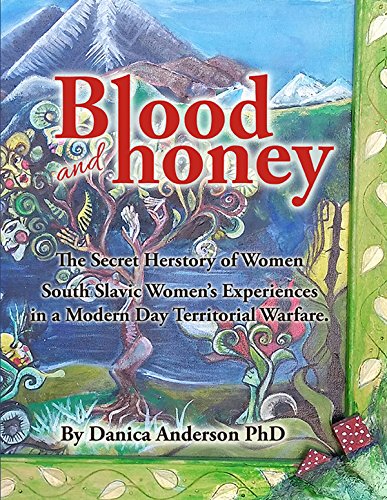
Book Review of Dr. Danica Anderson’s Blood and Honey by Glenys Livingstone Ph.D
[fusion_builder_container hundred_percent=”no” hundred_percent_height=”no” hundred_percent_height_scroll=”no” hundred_percent_height_center_content=”yes” equal_height_columns=”no” menu_anchor=”” hide_on_mobile=”small-visibility,medium-visibility,large-visibility” status=”published” publish_date=”” class=”” id=”” border_size=”” border_color=”” border_style=”solid” margin_top=”” margin_bottom=”” padding_top=”” padding_right=”” padding_bottom=”” padding_left=”” gradient_start_color=”” gradient_end_color=”” gradient_start_position=”0″ gradient_end_position=”100″ gradient_type=”linear” radial_direction=”center” linear_angle=”180″ background_color=”” background_image=”” background_position=”center center” background_repeat=”no-repeat” fade=”no” background_parallax=”none” enable_mobile=”no” parallax_speed=”0.3″ background_blend_mode=”none” video_mp4=”” video_webm=”” video_ogv=”” video_url=”” video_aspect_ratio=”16:9″ video_loop=”yes” video_mute=”yes” video_preview_image=”” filter_hue=”0″ filter_saturation=”100″ filter_brightness=”100″ filter_contrast=”100″ filter_invert=”0″ filter_sepia=”0″ filter_opacity=”100″ filter_blur=”0″ filter_hue_hover=”0″ filter_saturation_hover=”100″ filter_brightness_hover=”100″ filter_contrast_hover=”100″ filter_invert_hover=”0″ filter_sepia_hover=”0″ filter_opacity_hover=”100″ filter_blur_hover=”0″][fusion_builder_row][fusion_builder_column type=”1_1″ layout=”1_1″ spacing=”” center_content=”no” link=”” target=”_self” min_height=”” hide_on_mobile=”small-visibility,medium-visibility,large-visibility” class=”” id=”” hover_type=”none” border_size=”0″ border_color=”” border_style=”solid” border_position=”all” border_radius=”” box_shadow=”no” dimension_box_shadow=”” box_shadow_blur=”0″ box_shadow_spread=”0″ box_shadow_color=”” box_shadow_style=”” padding_top=”” padding_right=”” padding_bottom=”” padding_left=”” margin_top=”” margin_bottom=”” background_type=”single” gradient_start_color=”” gradient_end_color=”” gradient_start_position=”0″ gradient_end_position=”100″ gradient_type=”linear” radial_direction=”center” linear_angle=”180″ background_color=”” background_image=”” background_image_id=”” background_position=”left top” background_repeat=”no-repeat” background_blend_mode=”none” animation_type=”” animation_direction=”left” animation_speed=”0.3″ animation_offset=”” filter_type=”regular” filter_hue=”0″ filter_saturation=”100″ filter_brightness=”100″ filter_contrast=”100″ filter_invert=”0″ filter_sepia=”0″ filter_opacity=”100″ filter_blur=”0″ filter_hue_hover=”0″ filter_saturation_hover=”100″ filter_brightness_hover=”100″ filter_contrast_hover=”100″ filter_invert_hover=”0″ filter_sepia_hover=”0″ filter_opacity_hover=”100″ filter_blur_hover=”0″ last=”no”][fusion_text columns=”” column_min_width=”” column_spacing=”” rule_style=”default” rule_size=”” rule_color=”” hide_on_mobile=”small-visibility,medium-visibility,large-visibility” class=”” id=”” animation_type=”” animation_direction=”left” animation_speed=”0.3″ animation_offset=””] This book is an entrance into the grief and hope of the Mother (Earth/Cosmic Mother), in a particular region of Her stress (South Slavic countries); which is a place wherein much of the old indigenous ways are still accessible, and are able to provide a meeting place for healing/wholing. The methods applied and described by Danica Anderson, the author, in this beautifully presented book, may provide a model for approach to healing deep trauma, which is becoming more common on a global scale in these times. The method primarily begins with “bearing witness”: most chapters begin with the paragraph heading “When and Where I Bore Witness”, and Danica notes that hearing and bearing witness to such stories requires courage and bravery. Key to the healing is this: After three raging wars on Balkan soil, the people have been forced to return to the Megalithic South Slavic way of life since many of the modern conveniences they once relied on have been destroyed. They work in the fields, prepare the same food, and practice the same domestic arts that their ancestors engaged in thousands of years ago. These small acts are re-enacted and woven into the fabric of their present moments because so much is unavailable to them in the aftermath of war. The return to the Megalithic South Slavic way of life provides something new, however[1]. I felt that the traumatic experiences and the aftermath in this specific place may serve as a prototype of the planetary situation unfolding presently on a large scale. Frequently there were whole paragraphs of this very rich book that I wanted to write out for you, but to be practical I had to choose, how to give you a taste of this book. It speaks to an essence, an essential component of healing the trauma of the world, a world beset with chronic war, besieged by reckless boys parading as leaders – really hoodlums and vandals. And the women – mothers and grandmothers, and all those who love them, get on with the sustenance of life as best they are able, in the midst. As Danica describes: South Slavic female justice is an evolutionary process that occurs through small acts done consistently and with great love. Sweeping up after the wars and baking sweets while boiling thick coffee in a wide –based and narrow necked pot called ajesvahas been done silently for generations, behind the scenes of what was cited as momentous humanitarian aid and policies that did not support or recognise them[2]. And commenting on the men sitting hunched in cafanas and drinking a thick demitasse of coffee: The men staring into their cups are alone; they have no companions, no kolo, just extreme loneliness … The men smoke and drink their coffee as their women walk by, carrying immense packages of potatoes to plant or bags of precious flour to bake with while their children pull at their skirts[3]. The shattering – emotional and physical, that Danica speaks of and witnesses could be read as the shattering which many currently experience in many other global regions, including our hearts, in the face of the extant and wanton destruction of forests, rivers, species and peoples including children. Danica states that amongst other definitions of the word ‘Balkan’[4], the translation from Serbo-Croation to English means ‘blood and honey’: that is, ‘Bal’ meaning honey and ‘kan’ meaning blood. Yet as Danica describes later in the book, the ‘blood’ part of the word is originally not the blood of war as one may think in this era. The blood in this “land of Blood and Honey” was not “the spilt blood of wars or genocide but the rivers, the waters that feed the land into honey: abundance”[5]. The term ‘Balkan” is connected to migratory patterns, to a land of (life) blood and honey; but the term now “has a meaning for a century of brutal wars and diaspora”, a migration that is now perverted to “a fleeing from violence”. And as Danica describes, it is the South Slav’s relations with “the Moist Mother Earth”, encoded yet still in the DNA, and in remnants of cultural practices, and especially in women’s everyday constant sustaining of life, that is at the core of the healing process. She says: “I have experienced the psychosomatic healing that exudes from the women’s kolo rituals, and oral memory tradition science of ancient round dancing and other practices, that is not easily captured by traditional empirical methods”[6]. She describes it as the “women’s evolutionary approaches surmounting what most would say are impassable obstacles and arduous struggles … largely ignored by those humanitarian and justice agencies that were there to help”[7]. In one of all the powerful chapters in Blood and Honey (a chapter called “Bogumile”), Danica writes of the loitering unemployed males “standing around with nothing to do”, lining the Novi Travnik streets and filling the cafes: and I thought, is this not a global problem – males with not enough to do, in a world that needs so much to be done? Young Bosnian males boast of their warrior skills, and don’t know what to do with them: domestic violence reigns, as military skills
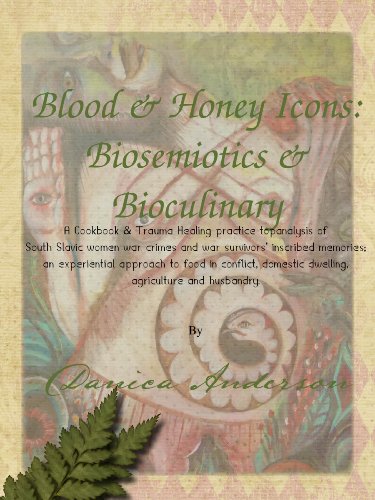
Book Review: Blood & Honey Icons: Biosemiotics & Bioculinary by Donna Snyder
[fusion_builder_container hundred_percent=”no” hundred_percent_height=”no” hundred_percent_height_scroll=”no” hundred_percent_height_center_content=”yes” equal_height_columns=”no” menu_anchor=”” hide_on_mobile=”small-visibility,medium-visibility,large-visibility” status=”published” publish_date=”” class=”” id=”” border_size=”” border_color=”” border_style=”solid” margin_top=”” margin_bottom=”” padding_top=”” padding_right=”” padding_bottom=”” padding_left=”” gradient_start_color=”” gradient_end_color=”” gradient_start_position=”0″ gradient_end_position=”100″ gradient_type=”linear” radial_direction=”center” linear_angle=”180″ background_color=”” background_image=”” background_position=”center center” background_repeat=”no-repeat” fade=”no” background_parallax=”none” enable_mobile=”no” parallax_speed=”0.3″ background_blend_mode=”none” video_mp4=”” video_webm=”” video_ogv=”” video_url=”” video_aspect_ratio=”16:9″ video_loop=”yes” video_mute=”yes” video_preview_image=”” filter_hue=”0″ filter_saturation=”100″ filter_brightness=”100″ filter_contrast=”100″ filter_invert=”0″ filter_sepia=”0″ filter_opacity=”100″ filter_blur=”0″ filter_hue_hover=”0″ filter_saturation_hover=”100″ filter_brightness_hover=”100″ filter_contrast_hover=”100″ filter_invert_hover=”0″ filter_sepia_hover=”0″ filter_opacity_hover=”100″ filter_blur_hover=”0″][fusion_builder_row][fusion_builder_column type=”1_1″ layout=”1_1″ spacing=”” center_content=”no” link=”” target=”_self” min_height=”” hide_on_mobile=”small-visibility,medium-visibility,large-visibility” class=”” id=”” hover_type=”none” border_size=”0″ border_color=”” border_style=”solid” border_position=”all” border_radius=”” box_shadow=”no” dimension_box_shadow=”” box_shadow_blur=”0″ box_shadow_spread=”0″ box_shadow_color=”” box_shadow_style=”” padding_top=”” padding_right=”” padding_bottom=”” padding_left=”” margin_top=”” margin_bottom=”” background_type=”single” gradient_start_color=”” gradient_end_color=”” gradient_start_position=”0″ gradient_end_position=”100″ gradient_type=”linear” radial_direction=”center” linear_angle=”180″ background_color=”” background_image=”” background_image_id=”” background_position=”left top” background_repeat=”no-repeat” background_blend_mode=”none” animation_type=”” animation_direction=”left” animation_speed=”0.3″ animation_offset=”” filter_type=”regular” filter_hue=”0″ filter_saturation=”100″ filter_brightness=”100″ filter_contrast=”100″ filter_invert=”0″ filter_sepia=”0″ filter_opacity=”100″ filter_blur=”0″ filter_hue_hover=”0″ filter_saturation_hover=”100″ filter_brightness_hover=”100″ filter_contrast_hover=”100″ filter_invert_hover=”0″ filter_sepia_hover=”0″ filter_opacity_hover=”100″ filter_blur_hover=”0″ last=”no”][fusion_text columns=”” column_min_width=”” column_spacing=”” rule_style=”default” rule_size=”” rule_color=”” hide_on_mobile=”small-visibility,medium-visibility,large-visibility” class=”” id=”” animation_type=”” animation_direction=”left” animation_speed=”0.3″ animation_offset=””] A Book Review of Blood & Honey Icons: Biosemiotics & Bioculinary by Donna Snyder Blood & Honey Icons: Biosemiotics & Bioculinary by Dr. Danica Anderson, Connie Simpson and Erin Hilleary (Dec 28, 2012) I bought this book to support work with South Slavic survivors of war and war crimes in the Balkan conflicts of the late 20th Century. For my money I got a complex book that ably serves many roles: a socio-political history of that specific conflict and related prior wars; an anthropological study, particularly of the women there, its mythology, its cultural artifacts from pre-historical times to the present, and the Slavic immigrant community of Chicago; a primer on reading tea leaves and coffee dregs; a set of iconographic images to use in self-discovery; a book of recipes of traditional ethnic food; and a lesson on healing practices useful for victims of violence and trauma anywhere. All that in one book of 208 pages. The first section of the Book, subtitled Biosemiotics: The Pedagogy of South Slavic Female War and War Crimes Survivors [and] Female Social Collective Practices is written in the language of academic social studies, a study of how the bodies and neurobiology of South Slavic women have been affected by threatening and frightening episodes expressed through archetypes. The technical jargon makes this section somewhat dense, but not impenetrable, due to the ample and vivid illustration of scholarly concepts with lucid and compelling examples from Danica’s own childhood as a member of the South Slavic immigrant community of Chicago. Her father, a rural man, and her mother, who had been interred in a World War II prison camp, immigrated to the United States, where Anderson was born, although she did not learn English until second grade. Anderson’s experience as the child of non-English speaking immigrants mirrors the life of many immigrants where I live on the border of El Paso, Texas and Juárez, Chihuahua, people whose families live here but surrounded by the culture of the country left behind. As the children of immigrants living on this side of the border, once Danica learned English, even as a small child she had to interpret for her parents and other elders. Her close involvement with the immigrant community resulted in her own emotional experience of the traumas suffered by those older than she, as well as providing her direct experience of the culture’s female social collective practices. The South Slavic traditions were inculcated into her heart and life, particularly the kolo, the ritual and social circle dances she learned as a child and which she draws upon in her healing work with trauma survivors, not only victims in the Balkan wars but also elsewhere in the world such as Haiti, the Sudan, Afghanistan, and Uganda where other great catastrophes and atrocities have occurred and people have suffered the affects of constant war. The book itself reflects the kolo, the circles and repetitions of the dance, the stories and images repeated in various sections in such a way as to integrate memory with understanding in the reader. In addition to the linguistic, anthropological, and neurobiological discussion in the section on pedagogy, the book has a section of artistic images, icons taken or adapted from prehistoric art and later folk tales. These lavish images can be downloaded from the kolo website, along with the text of the book, and instructions are provided on how you can use the images to find insight into your own history and personal growth. This section is truly beautiful, and yet conveys complex data of many millennia of life in the Balkan region, which can be translated and integrated into a universal consciousness. Each icon accompanies a description of its cultural source and its relationship to the current situation of the widows and children survivors who populate the region. Each of these modern stories are moving, even horrific, yet are shown in the context of movement from trauma to an indigenous form of treatment and healing. Each icon is also associated with a recipe for traditional South Slavic ethnic food, with an emphasis on locally grown, natural foodstuffs, agriculture, and husbandry. These recipes mirror the current upsurge of an interest in local products and self-sufficiency in the permaculture movement here in El Paso, which has close ties to the political advocacy and cultural work of La Mujer Obrera, the region’s garment worker labor organization. I find these parallel connections between women’s cultural and political work and the movement to buy locally grown and natural foods fascinating, and not at all likely to be coincidental. Because of Anderson’s focus on the healing of the widows and victims of mass rape and other military violence and terrorism, there is also a focus on women’s traditional ways of finding community. In South Slavic culture, one common practice is the reading of tea leaves or coffee remnants after sharing a hot drink and sweet bread. Consequently the book provides a section explaining the practice and providing instruction. In the Mexico and US borderlands, many women practice indigenous healing, from curanderas, who use herbal remedies, to sobadoras, who practice a fierce and effective type of massage therapy, to
UN PeaceKeepers Involved in Congo War Atrocities
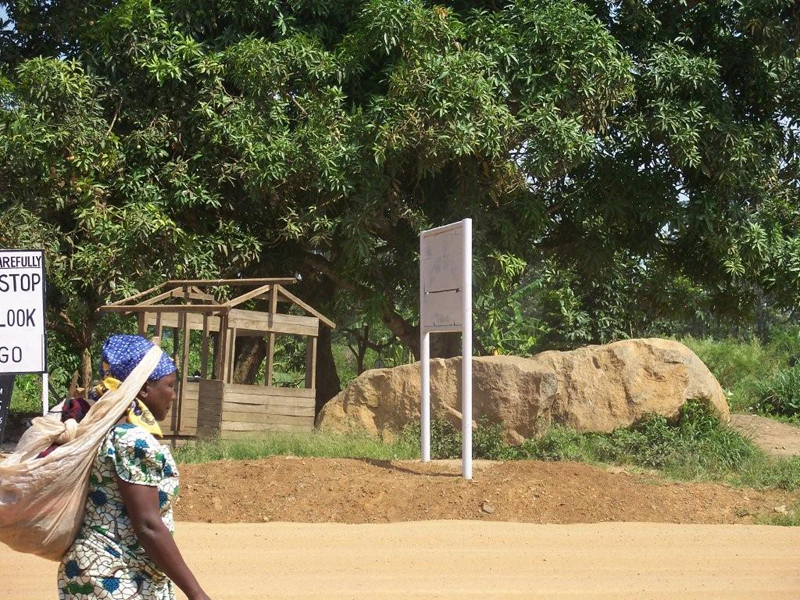
[fusion_builder_container hundred_percent=”no” equal_height_columns=”no” menu_anchor=”” hide_on_mobile=”small-visibility,medium-visibility,large-visibility” class=”” id=”” background_color=”” background_image=”” background_position=”center center” background_repeat=”no-repeat” fade=”no” background_parallax=”none” parallax_speed=”0.3″ video_mp4=”” video_webm=”” video_ogv=”” video_url=”” video_aspect_ratio=”16:9″ video_loop=”yes” video_mute=”yes” overlay_color=”” video_preview_image=”” border_size=”” border_color=”” border_style=”solid” padding_top=”” padding_bottom=”” padding_left=”” padding_right=””][fusion_builder_row][fusion_builder_column type=”1_1″ layout=”1_1″ background_position=”left top” background_color=”” border_size=”” border_color=”” border_style=”solid” border_position=”all” spacing=”yes” background_image=”” background_repeat=”no-repeat” padding_top=”” padding_right=”” padding_bottom=”” padding_left=”” margin_top=”0px” margin_bottom=”0px” class=”” id=”” animation_type=”” animation_speed=”0.3″ animation_direction=”left” hide_on_mobile=”small-visibility,medium-visibility,large-visibility” center_content=”no” last=”no” min_height=”” hover_type=”none” link=””][fusion_text columns=”” column_min_width=”” column_spacing=”” rule_style=”default” rule_size=”” rule_color=”” hide_on_mobile=”small-visibility,medium-visibility,large-visibility” class=”” id=”” animation_type=”” animation_direction=”left” animation_speed=”0.3″ animation_offset=””] Congolese woman walks in Benin. The mass rapes in Congo DRC continue unimpeded by the International Criminal Court for war crimes. “YOU WILL BE PUNISHED” – REPORT Attacks on Civilians in Eastern Congo This 183-page report documents in detail the deliberate killing of more than 1,400 civilians between January and September 2009 during two successive Congolese army operations against a Rwandan Hutu militia, the Democratic Forces for the Liberation of Rwanda. The UN writes its own report and barely outlines in detail which of its PeaceKeepers committed the war atrocities with Congolese army operations against a Rwandan Hutu militia, the Democratic Forces for the Liberation of Rwanda. Link to Full Human Rights Watch Report UN peacekeepers made important efforts to protect civilians in this complex and difficult terrain, Human Rights Watch said. But the peacekeeping force’s role as a joint player in the military operations, providing substantial support to the Congolese army, has implicated peacekeepers in the abuses and undermined the mission’s primary objective, which is to protect civilians. Some victims were tied together before their throats were, according to one witness, “slit like chickens.” The majority of the victims were women, children, and the elderly. The FDLR first raped the mother and inserted a large stick in her vagina causing serious injury which led to her death. When the young girl cried out in distress, the FDLR raped her as well. Commentary Many UN Security Council ambassadors have visited Congo and expressed outrage at the massive sexual violence,” said Van Woudenberg.” Faced with another UN proclamation and with what constitutes torture, gang rape, enforced sexual slavery of Congolese females, the UN provides a 183 page document that tries to distance the useless organization from any possible repercussions of its involvement and lack of involvement. In fact the UN spokesmen stated in the report: “”Many UN Security Council ambassadors have visited Congo and expressed outrage at the massive sexual violence,” said Van Woudenberg. “Yet rape is increasing – not decreasing – in eastern Congo. That outrage needs to be translated into bold and effective action to help protect these women and girls.” The 183 report by the UN is titled UN peacekeepers made important efforts to protect civilians in this complex and difficult terrain. Nothing can be so far from the truth. I have been in the Eastern part of the Congo and witnessed the world of the Congolese female and children. Fear does not shed light on the violence. Moreover, it is not a test of truth: false ideas, faking humanitarian efforts such as the UN are rolled into the rule of law, UN charters and so-called UN Peacekeepers who participate or are bystanders to the most violent sexual abuse towards women and children. January 2009, under the supposed UN expert group called peacekeepers- an oxymoron- with the Congolese and Rwandan government are doing a joint military operation known as Umoja Wetu and Kimia II is still being conducted. But the report itself states: “”The Security Council needs to provide UN peacekeepers in Congo with clear and concrete direction,” Van Woudenberg said “Sending a group of experts and making clear to the Congolese army the conditions under which the peacekeepers will work with its troops can play a crucial role in ending abuses and ensuring that UN peacekeepers are not implicated in future atrocities.” The inhumanity by the UN chartered to prevent and help the affected populations which are mostly women and children needs to be center point of our outrage. The amount of paper declaring whatever needs to be declared so as to look like they are earning their high salaries, elaborate environments or what is mostly covering their butts from any legal repercussions constitutes an extraordinary example of unconscious hatred towards women and children. It is incomprehensible for Van Woudenberg to appeal for the need of the security council to have a clear and concrete direction in ending abuses and ensuring Un peacekeepers are not implicated in future atrocities. I ask where was this clear and concrete direction before the brutalities committed and point to the infinite abyss of UN proclamations, charters, councils, to UNIFEM sections of the UN. The violence dynamics show up not only at the macro-level of the species-mind but in the smaller, transient groups or sections of the UN. Please lodge a protest to the UN Security Council and appeal to know the names of each individual peacekeeper involved and ultimate head of the operations to learn if any consequences were given. Write a letter to the International Criminal Court and ask for an investigation of War Crimes. Danica Anderson http://www.hrw.org/node/87151 CONGO – “YOU WILL BE PUNISHED” – REPORT Attacks on Civilians in Eastern Congo This 183-page report documents in detail the deliberate killing of more than 1,400 civilians between January and September 2009 during two successive Congolese army operations against a Rwandan Hutu militia, the Democratic Forces for the Liberation of Rwanda Source: http://www.hrw.org/en/news/2009/12/12/un-act-end-atrocities-eastern-congo December 13, 2009 ( New York ) – The United Nations Security Council should urgently act to protect civilians in the eastern Democratic Republic of Congo from further atrocities by government and rebel forces and ensure peacekeepers are not implicated in abuses, Human Rights Watch said in a report published today. The 183-page report, “‘You Will Be Punished’: Attacks on Civilians in Eastern Congo,” documents in detail the deliberate killing of more than 1,400 civilians between January and September 2009 during two successive Congolese army operations against a Rwandan Hutu militia, the Democratic Forces for the Liberation of Rwanda (FDLR). The report is based
Syrian War in 2012
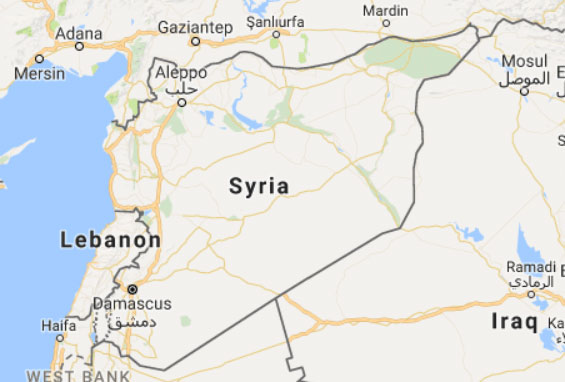
On October 4, 2012, after a Syrian bombing kills five women and children in a Turkish border town, has CNN interviewing former Nation ‘Supreme’ Commander, Wesley Clark, as their media an expert. Clark states that the killing of Turkish mother’s and children, “It happens…..civilian casualties.” Citing it is a part of a broader conflict and how strategies are at work in the region, the reasoning behind the patriarchs in NATO, and humanitarian organizations conglomerates such as the UN, are that they cannot be mobilized as of yet. ‘The powers that be’ reasoning; it is not a full scale war or enough refugees to merit the spending of their coffers sitting at millions and millions of dollars in their organizations. You and I, ‘we’ gave them our inner authority, emptied the insides of our pockets for the experts in violence and autocrats to push paper or do critical analysis to make sure the situation fits the definition to merit the slightest intervention. Media displays the horrors of yet another war. You could substitute the Syrian peoples with that of the Balkan War survivors. Meanwhile, the axis of resistance which refers to Iran, Syria, and Hezbollah in Lebanon to the Palestinian Islamist group Hamas in Gaza continues to erupt. Whole countries recovering from ethnic hatreds, wars and violence surely shudder at each image flying past on their television sets or in more removed countries it’s their smart phones, ipads or laptops. Ho-hum is the reaction to the war images if it is not as succulent as the graphic bodies in a fine spray of red rain and bomb shrapnel. We are addicted to following fresh bodies, bombs and bullets. Just like garbage once in the trash can or on curbside for pick up – very few think of where it goes- the aftermath. You see, being a bystander is so much more rewarding sitting in front of our televisions, ipads, laptops or smart phones. We can pretend we are just being more informed while our physical bodies grow limp and our capacity to respond and act atrophies. We believe someone else will do it. We believe the outside authorities are the truth. Nowhere in media do I see the ‘real’ cost in human lives. There is not a single article on collateral damage, the cost of homes destroyed, and the maimed and lame limbed individuals that can no longer feed their families. I notice how it is our homes, our families in the bulls’ eye of mass destruction weapons. The bystanders feel euphoric that is not them or their homes on fire. They have media images and reports to prove that false sense of safety. Bystander living is the end all. It is the end all of life on this planet. The term “we, the people” is no longer able to respond as a community.
Syrian War
On October 4, 2012, after a Syrian bombing kills five women and children in a Turkish border town, has CNN interviewing former Nation ‘Supreme’ Commander, Wesley Clark, as their media an expert. Clark states that the killing of Turkish mother’s and children, “It happens…..civilian casualties.” Citing it is a part of a broader conflict and how strategies are at work in the region, the reasoning behind the patriarchs in NATO, and humanitarian organizations conglomerates such as the UN, are that they cannot be mobilized as of yet. ‘The powers that be’ reasoning; it is not a full scale war or enough refugees to merit the spending of their coffers sitting at millions and millions of dollars in their organizations. You and I, ‘we’ gave them our inner authority, emptied the insides of our pockets for the experts in violence and autocrats to push paper or do critical analysis to make sure the situation fits the definition to merit the slightest intervention. Media displays the horrors of yet another war. You could substitute the Syrian peoples with that of the Balkan War survivors. Meanwhile, the axis of resistance which refers to Iran, Syria, and Hezbollah in Lebanon to the Palestinian Islamist group Hamas in Gaza continues to erupt. Whole countries recovering from ethnic hatreds, wars and violence surely shudder at each image flying past on their television sets or in more removed countries it’s their smart phones, ipads or laptops. Ho-hum is the reaction to the war images if it is not as succulent as the graphic bodies in a fine spray of red rain and bomb shrapnel. We are addicted to following fresh bodies, bombs and bullets. Just like garbage once in the trash can or on curbside for pick up – very few think of where it goes- the aftermath. You see, being a bystander is so much more rewarding sitting in front of our televisions, ipads, laptops or smart phones. We can pretend we are just being more informed while our physical bodies grow limp and our capacity to respond and act atrophies. We believe someone else will do it. We believe the outside authorities are the truth. Nowhere in media do I see the ‘real’ cost in human lives. There is not a single article on collateral damage, the cost of homes destroyed, and the maimed and lame limbed individuals that can no longer feed their families. I notice how it is our homes, our families in the bulls’ eye of mass destruction weapons. The bystanders feel euphoric that is not them or their homes on fire. They have media images and reports to prove that false sense of safety. Bystander living is the end all. It is the end all of life on this planet. The term “we, the people” is no longer able to respond as a community.
Bird Killing 300 Mile Coastal Toxic Algae Bloom & South Slavic One Species Mind
The toxic algae bloom has armed scientists with a new theory. In place of observations or what we can learn from Mother Nature on how to immediately respond, scientists armed themselves, against the forces of the natural world fixating on having the right theory. The adjustment to sciences’ storehouse of theories has the asteroids as the main factor in the extinction of dinosaurs but now point to the toxic algae bloom as a probable factor for the extinction. Scientists, novices in observation of Mother Nature, are just beginning to evaluate the blooms of a single-cell, saltwater algae species, the Akashiwo Sanguine in the Northwest Puget Sound. Thousands of bird carcasses mark the area of what is known as the Pacific Northwest pristine waters and land. On the sand near the algae-generated foam on Klipsan beach, the north end of the Long Beach Peninsula of Washington State, a red-throated loon convulses from its immersion in the lethal 300 mile toxic bloom. It takes closer inspection to see the red color on the throat of the loon in the soap like foam. The saltwater algae damage the bird’s natural oils that protect against hypothermia in cold waters. The failures of the birds’ oiled feathers, somewhat, equivalent to surfers’ with their tight waterproof and warm manufactured skins, have, also, succumbed to illness. Like the thousands of birds falling from the skies or unable to fly again, the surfers’ pseudo skin cannot protect against sickness that coats the bird feathers like an oil spill. Eventually touching all into a single field of being, what happens to the birds happens to you. What does not register with the surfers or kayakers, just as with certified scientists, is the degree of how we learn something about the mechanisms of Mother Nature operating at the micro playground but reflecting the over arching cosmological playground. If we are to accept our separateness and segmentation from the greater whole as science demands for Mother Nature, we cannot crystallize Mother Nature’s diverse species mind that link all together. The death of thousands of birds in the Northwest Marine waters and the diseased human skin from exposure to the Akashiwo Sanguine, saltwater algae species, articulates an overarching example of the single fabric (Mother Nature) organized into the natural order which, intensively, harbors the one species-mind. It is an archetypal architecture that consciously undresses Mother Nature by emptying any notions of control, theories, or science’s longitude studies. The archetypal architecture of the one-species mind is threaded in most tribal peoples. Significant patterns within the tribal peoples when facing horizon events evokes an immediate period of intensified learning, as a means of responding. While the science field has, at points, incorporated intensified learning applications, study is not synonymous with the one species- mind. Studies can go on for centuries having no validity within the ability to respond or act in a “timely” fashion. Responsiveness is participation immersed in the one species-mind as opposed to science’s and other modern day institutions’ reacting with each horizon events. Constantly reacting in the aftermath of such catastrophes has implemented cement like structure of reacting ranging from fire departments, toxic clean-up protocols, peace keeping armies or mandatory inoculations. Questioning is least found among the plethora of manuals and procedures that could lead to learning environments as the one species mind responsiveness. Note that the one species mind responsiveness is both the thousands of deaths of birds and illnesses of humans playing in Mother Nature’s oceans and that of the flock of birds rising in synchronicity on long distance flights without maps or flight control monitors. What comes up is the solidarity evoked in the one species mind for both the massive deaths and that of life searching avian migrations but, elegantly responsive pro-actively and in the moment consciousness. In the South Slavic and Russian female culture and female humanities, tens of thousands of years older than any scientific longitude study or holy books written by men-it is pure science undivided. We have only to survey the evidence of Slavic science found in the thousands of archeological figures of zoomorphic Bird Goddesses and Fish Goddesses. Our ancients without computers or metal technologies observed avian and marine species, to thread social memory via intensified learning response practices. As a science of observation and witnessing all of life, for the Slavs, the birds are, essentially, the witches/angels’ (wise living feminine) capacities to respond with solidarity. What this indicates is the application of the one species mind when the need arises, the Slavic triple aspect of before, interim and in the aftermath of life events. Modern archeomythological renditions have more or less submitted to the idea of angels across many patriarchal or father sky god religions as an appeasement that submerges their fear and deep suspicions of witches as evil. For the Slavs, Mother Nature is the iconic Baba Yaga, translated as wise woman and Yaga the term for Pelican and ‘fright.’ Frequent subjects of sainthood in Catholic worship or Orthodox churches, angels are fully dressed and resplendent with avian wings to proclaim active participation in superordinate circles of the archetypal architects of Mother Nature one species mind. For the Slavs, the archetypal architect is navigated by Slavic Baba Yaga, the first witch that continued into the Greek and Roman Métis, Fates and both the warrior angel and saint. The social memory for the witch-Baba Yaga-Mother Nature is her ability for prophecy, seer, or wisdom which is in reality her ability to remain within the connection of one species-mind. Flying the skies in her mortar and pestle (represents her bio-agricultural and botany for healing) according to the folk tale, Baba Yaga’ s one species mind sees- feels, while, intuitively and rationally has an immediate knowing for the vast connections in being one family. But, how do we see the fullest connection to the past into our present moment of climate change? In modern day the South Slavic women’s linens and kilms/rugs attests to the legacy of social memory revolving around the
Her political activities define her radical nature
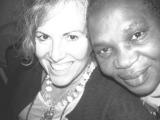
Wahu Kaara and Danica Anderson, Female Solidarity Wahu Kaara, Nobel Peace Prize Nominee/Winner 2005, board member of the Kolo: Women’s Cross Cultural Collaboration is a leading advocate for social justice in Kenya. She says: “African women are not dying for Africa anymore; they want to live for Africa.” She works for the Kenya Debt Relief Network (Kendren), the African Social Forum and the Kenya Social Forum. Her political activities define her radical nature and instead of her name or stereotyped roles females play, Wahu’s identity is the community she keeps. A 53-year-old widow, describes herself as a global social justice activist. The former history and Kiswahili teacher says she has been radical from an early age, having been involved in promoting social justice and economic democracy for 30 years. Despite the repression from the government and the hard times she experienced when her husband was forced into exile, the mother of four relentlessly worked locally and is today involved internationally in the African Social Forum and the Kenya Debt Relief Network, and she is also one of the main leaders of Katiba Watch, the main lobby group spearheading the ongoing mass mobilization in Kenya around the demand for a new constitution. We can learn more about Wahu through a series of quotes and pieces from conversations I had with her in Toronto, Canada for the Genevieve Vaughn sponsored (M) Otherworld Conference. This is Wahu’s voice and identity: All movements we do must know how to connect making what we know. Refuse to be a victim. Stand up in your power. Fertility of Women’s Spirituality Women are being dislocated and disoriented. We need to stop the unending re-inventing and re-engineering of women, who we are. The matriarchy is the heartbeat of the community. The waking up of the people…. How matriarchy is a community not a system. We have to show how it works. We get lost when we do not connect all.
Witnessing in the Congo DRC, Africa
Witnessing in the Congo DRC, Africa by Danica Anderson If you had the exquisite pleasure to witness the Congo-Africa, I am sure you would witness what I have observed. The violence and conflicts are intergenerational practices in postlithic societies. It is no small wonder that Post Traumatic stress is, also, intergenerational. In Paleolithic and Neolithic eras, stress helped generate collaborative practices and connectivity prospecting social positive growth. As I witness the trauma within the peoples of Africa, I observe how stress is used to have submission and to create the impregnating prison called poverty. It is a well-known fact that stress in females causes more sons to be born. My intuitive grasp of the fact that more sons are born under maternal stress is as if it were to birth more warriors to the global army called violence. From the book “On Deep History and the Brain,” neurophysiologist Robert Sapolsky neurophysiologist is quoted as saying “When humans invented poverty, they came up with a way of subjugating the low-ranking like nothing ever before seen in the primate world.” In the human world – supposedly superior to the primate world- seems to have increased the mechanisms to perpetuate and foster stress hormones- creating physical poverty and spiritual poverty. Despite the seemingly endless and chronic poverty and violence I have observed the small acts moving past the traumas, tragedies and poverty in the most unexpected places and spaces. When I am offered the observation of billowing African rain clouds dropping rain onto refugee’s meager gardens, and dancing children shrieking delight opening the windows and gates of the poverty prison instantly are opened. I see the return to the Paleolithic and Neolithic eras and practices, where Mother Nature heals and provides signposts for much needed relief from domineering stress crashing down on their shoulders. As the Congolese children cavort in the Mother Nature’s elements, with some children in rags or naked in their poverty, I witness a powerful coalition in which the weak can be empowered and over power the warriors of violence/poverty. I passed one Congolese mother hoeing her luscious garden on a steep incline as her three children play nearby. Another is singing as she carries a bundle of heavy sticks on her head. In the Congo, the environment teaches me that the real intention for my visit here is to uncover the world of peoples who are not in history or media except as victims. I ache to see the powerful coalition and their first person stories unfolded in history books and media. It is important to have the laughter from children and having the small acts women do across the globe in the evening newscasts. I see the Congolese women as the true form of what we call heroines as they grow food, nurture and care for their children. The Congolese children squealing with laughter as the soft rain spills from dramatically beautiful rain clouds above are the empowered forces that quell the ruling oligarchies in an instant. I am witnessing the laughter and glee of Congolese children and the passion of Congolese women hoeing their gardens as an empowering social memory that easily moves past the stress mechanisms readily induced in their lives and our lives. What if we decided to witness the peoples who are left without a written word and without written histories of their invisible lives? What would we learn? We would learn that the young are rising populations here…most are orphans left to die where they tread…. Women are objects of abuse and violence and die in great numbers. Childbirth is one of the leading causes of death. Sometimes, bearing witness fills us with the burden of insight.